 LANGUAGE
 English
 Deutsch
 Español
 Français
 русский









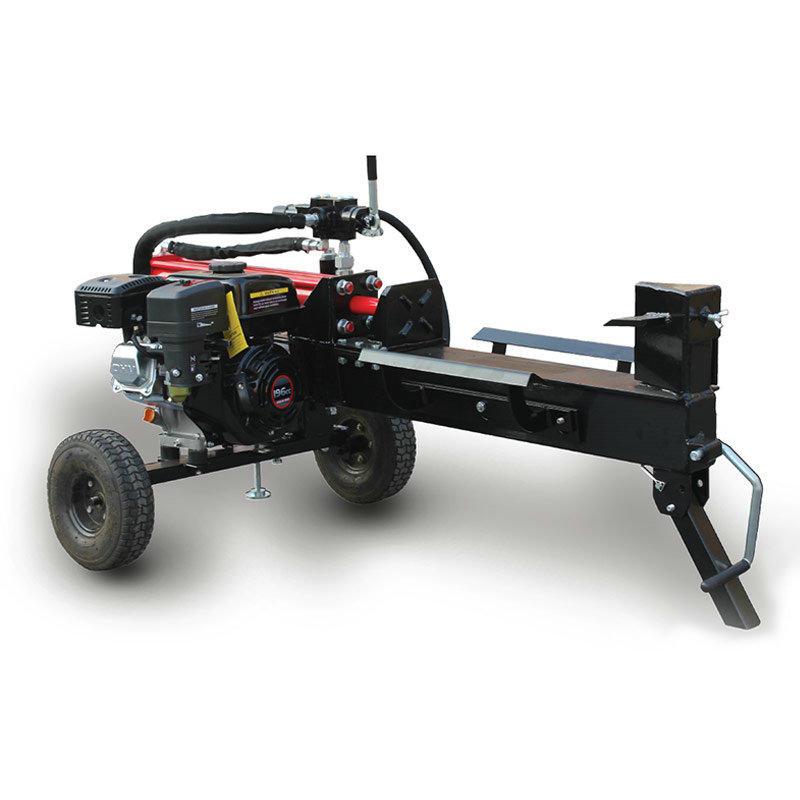
DESCRIPTION Working at horizontal position onlyAuto return hydraulic c...
See Details
12-Ton Electric Log Splitter: Performance, Design, Manufacturing Quality, and Buying Guide
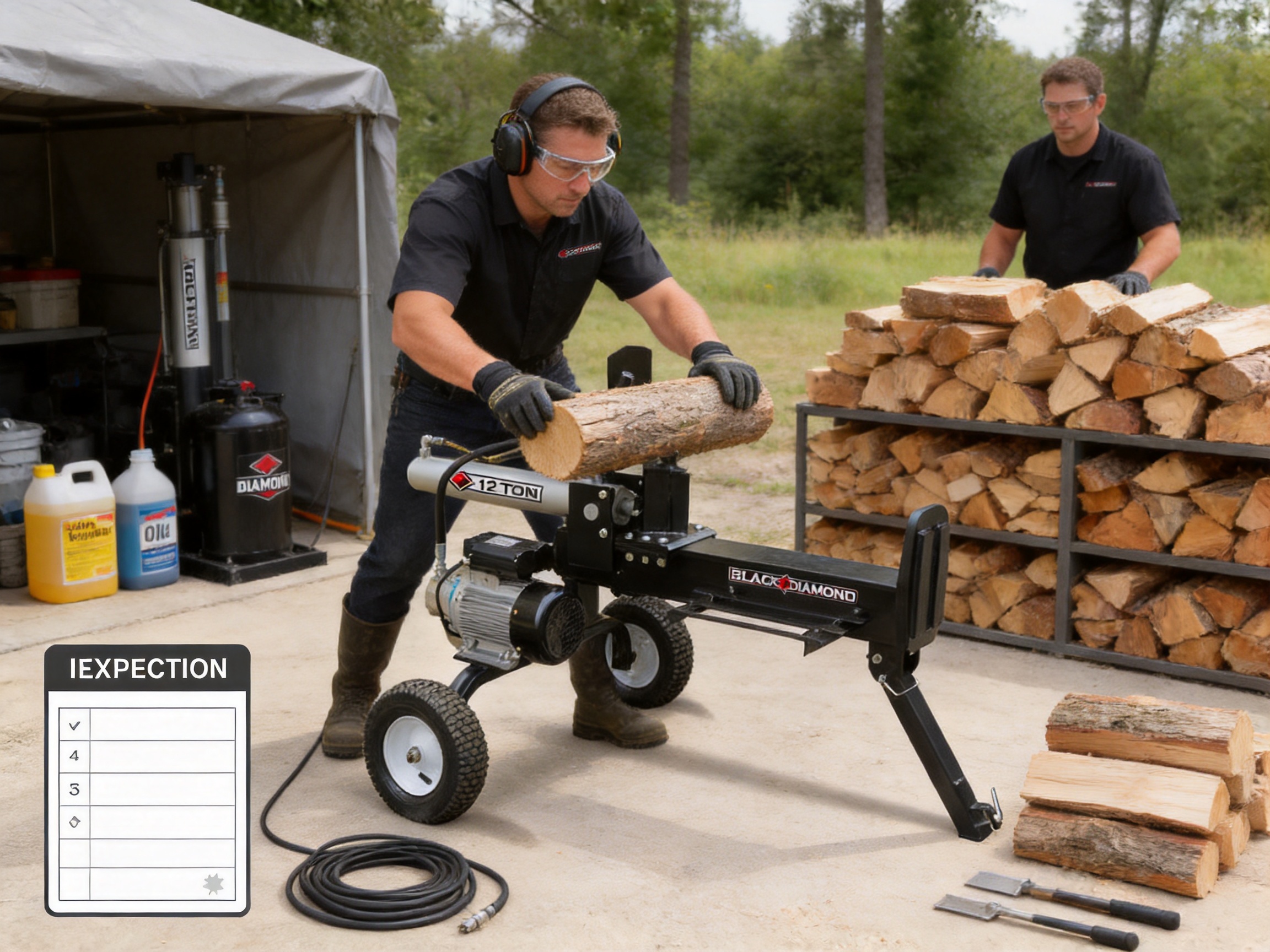
Introduction
Firewood preparation can become a demanding seasonal task when logs are too large, too heavy, or too dense to split efficiently by hand. A powered log splitter reduces physical effort, improves productivity, and provides a more consistent splitting result. For homeowners, small property owners, firewood sellers, and outdoor equipment distributors, selecting the correct machine involves more than checking the advertised tonnage. The splitter must also offer a suitable power source, practical cycle time, sufficient log capacity, reliable hydraulic performance, manageable transportation, and durable construction.
The Black Diamond 12ton ELECTRIC Log Splitter LSE12D is designed for users who want substantial splitting force without relying on a gasoline engine. It is a horizontal-only electric hydraulic log splitter with a half-beam design, a 2.2-kilowatt motor, a two-stage 5-gallon-per-minute pump, and a maximum splitting force of 12 tons. Its stated cycle time is 16 seconds, and it accommodates logs up to 21 inches, or approximately 540 millimeters, in length.
This combination places the LSE12D in a practical middle range for residential and light commercial firewood processing. It is more capable than small entry-level electric splitters, while remaining simpler and generally more convenient to operate than many gasoline-powered machines. The unit is also engineered around a compact product format, with 13-inch wheels, a maximum towing speed of 5 miles per hour, and a package size suitable for shipment and distribution.
Behind the product is Jiashan Superpower Tools Co., Ltd., a Chinese manufacturer specializing in log splitters, dump carts, spreaders, lawn sweepers, lawn aerators, and other outdoor power equipment. The company reports more than two decades of industry experience, an ISO 9001:2015-certified quality management system, and production of products carrying CE certification where applicable. These capabilities are important for importers, dealers, and equipment brands seeking a stable manufacturing partner rather than a one-time product source.
This article examines the LSE12D’s construction, specifications, operating advantages, competitive position, manufacturing background, applications, maintenance requirements, and purchasing considerations.
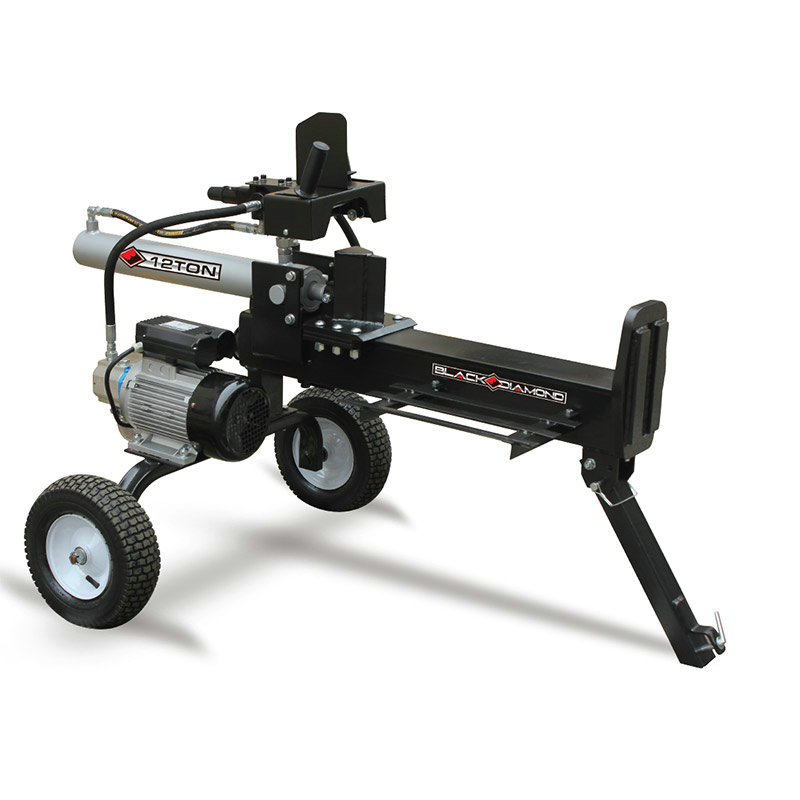
Black Diamond 12ton ELECTRIC Log Splitter LSE12D
Product Overview
The LSE12D is built around a hydraulic splitting system. An electric motor powers a hydraulic pump, the pump pressurizes hydraulic fluid, and the fluid moves a cylinder that drives a hardened steel wedge through the log. This basic operating principle is common throughout the powered log splitter market, but the quality of the individual components and the way they are integrated determine the user experience.
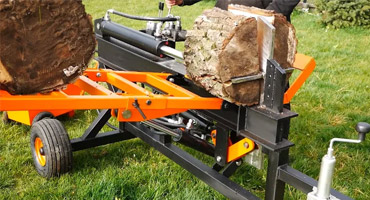
The machine accommodates horizontal splitting only. In horizontal operation, the log is placed directly on the beam or support area, and the operator positions the log between the fixed wedge and the moving ram. This arrangement is straightforward and familiar to most users. It also avoids the need to lift heavy logs to a vertical splitting position, although the operator still needs to place each log onto the working surface.
The half-beam design contributes to a comparatively compact structure. Rather than using a full-length heavy beam extending through the entire machine, the half-beam arrangement concentrates the main structural support around the splitting zone. This can help reduce material use and overall bulk while maintaining the beam strength needed for the specified capacity. It also supports the product’s shipping efficiency and helps make assembly more manageable.
According to the supplied product information, the average assembly time is under 30 minutes. Actual assembly time will depend on the user’s tools, familiarity with mechanical assembly, and the condition of the packaging. Nevertheless, a short assembly process is a useful advantage for retailers and end users because it reduces the time between delivery and first operation.
The splitter is rated at a maximum force of 12 tons. Tonnage ratings should not be interpreted as a guarantee that every 12-ton machine will split every type of wood. Wood species, moisture content, knot structure, grain direction, log diameter, temperature, and correct positioning all affect performance. However, a 12-ton hydraulic system provides a useful level of capability for common residential firewood work and many small-scale processing tasks.
Key Specifications
| Specification | Stated Detail |
|---|---|
| Model | LSE12D |
| Product type | Electric hydraulic log splitter |
| Maximum splitting force | 12 tons |
| Operating direction | Horizontal only |
| Cycle time | 16 seconds |
| Motor | 2.2 kW electric motor |
| Maximum log length | 21 inches / 540 millimeters |
| Cylinder | 3-inch bore by 19-inch specification |
| Pump | 5 gallons per minute, two-stage |
| Hydraulic capacity | 1.85 gallons / 7 liters |
| Wedge | 5.5-inch hardened steel wedge |
| Wheels | 13 inches |
| Maximum towing speed | 5 miles per hour |
| Net weight | 231.5 pounds / 105 kilograms |
| Gross weight | 272 pounds / 123.5 kilograms |
| Package dimensions | 50.4 by 22.4 by 16.5 inches / 128 by 57 by 42 centimeters |
| Container quantity | 145 pieces per 40-foot container |
The specification set indicates a machine designed for practical balance rather than maximum industrial output. The 2.2-kilowatt motor provides the power required to operate the hydraulic system, while the two-stage pump is intended to combine faster ram movement during low-load travel with higher-pressure operation when the wedge encounters resistance. This is a common and effective approach for improving cycle efficiency without requiring an excessively large motor.
Electric Power and Operating Convenience
One of the most important advantages of an electric log splitter is the absence of gasoline-related operating tasks. A user does not need to mix fuel, refill a fuel tank, clean a carburetor, or store gasoline for seasonal use. Electric operation also avoids exhaust emissions at the point of use, making the machine more suitable for outdoor residential areas, barns with appropriate ventilation, and other locations where engine exhaust would be inconvenient.
Electric motors generally start with the push of a control and do not require repeated pull-starting. This can be particularly helpful during cold weather, when gasoline engines may be difficult to start. Electric operation also eliminates engine oil changes and many of the adjustments associated with small internal-combustion engines.
Compared with a gasoline splitter of similar general capacity, the LSE12D can offer a quieter operating experience. Hydraulic noise and the sound of the wedge contacting wood are still present, but the user avoids the continuous high-pitched engine noise and exhaust vibration of a gasoline power unit. Lower noise can make communication easier when two people are working nearby and can reduce disturbance around homes.
The electric format is most suitable when a properly rated power supply is available near the work area. Users should verify the required voltage, frequency, current rating, extension-cord specifications, and circuit protection before operation. The supplied product information identifies the motor power as 2.2 kilowatts but does not state every regional electrical configuration. Dealers should therefore confirm the appropriate electrical version for each destination market.
Electric power is not automatically superior in every environment. Remote woodland locations without grid access may favor a gasoline machine or a portable generator. However, for residential firewood preparation, farmyards, workshops, and managed outdoor spaces with suitable electrical service, the electric format offers a highly practical combination of convenience, lower routine maintenance, and clean operation.
Hydraulic Performance and 12-Ton Splitting Force
The hydraulic system is the core of the LSE12D. Its stated 5-gallon-per-minute, two-stage pump is designed to move hydraulic oil efficiently through the system. In a typical two-stage arrangement, the pump supplies higher flow when resistance is low and switches to a pressure-focused mode when the wedge begins forcing through difficult wood. This allows the ram to travel relatively quickly during much of its movement while retaining the pressure needed for demanding sections of a log.
The 12-ton maximum splitting force provides a meaningful capability advantage over many small electric splitters intended only for light, narrow firewood. A larger force rating can help the machine manage thicker pieces and more challenging grain patterns, provided that the wood remains within the product’s intended operating range. The actual result depends on the condition of the hydraulic system and correct operator technique as much as on the nominal force rating.
The 3-inch by 19-inch cylinder specification indicates a cylinder sized for the machine’s stated force and travel requirements. Cylinder bore, hydraulic pressure, stroke length, and pump flow interact directly. A larger bore can generate greater force at a given pressure, while a longer stroke can accommodate longer logs but may increase the required oil volume and cycle time. The LSE12D’s cylinder configuration is matched to a maximum log length of 21 inches.
The 16-second cycle time offers a useful indication of working speed. Cycle time is normally measured from one ram movement through its return, although exact testing methods can vary. A 16-second cycle allows a practiced operator to process a steady supply of prepared logs without waiting excessively between pieces. Productivity will still depend on log handling, repositioning, splitting pattern, operator experience, and whether the logs need to be cleared or stacked after each cycle.
The stated hydraulic capacity is 1.85 gallons, or 7 liters. Maintaining the correct oil level and using the specified hydraulic fluid are essential. Insufficient fluid can cause erratic operation, overheating, or pump damage, while contaminated fluid can accelerate wear in the pump, cylinder, seals, and control valve.
Beam, Wedge, and Log Capacity
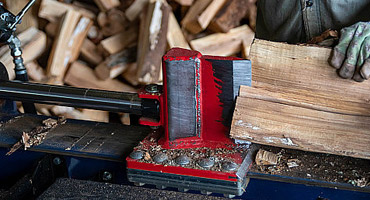
The LSE12D uses a 5.5-inch hardened steel wedge. Wedge material and geometry influence how force is transferred into the wood. Hardened steel is selected to resist deformation and wear as the wedge repeatedly contacts logs. A durable wedge can help preserve splitting performance over time, particularly when the machine is used regularly.
Users should avoid striking the wedge with external tools or attempting to split materials for which the machine was not designed. Metal, stones, embedded hardware, and heavily contaminated wood can damage the wedge and create hazardous fragments. Logs should be inspected before splitting, especially when processing reclaimed timber or wood from construction sites.
The maximum stated log length is 21 inches, or 540 millimeters. This capacity suits many common firewood preparation tasks. It also provides a useful fit for users who cut logs to a standard stove or fireplace length below the machine’s maximum. Logs should not be forced into the working area if they exceed the specified length, because excessive length can interfere with ram travel and create unstable positioning.
Horizontal-only operation has both advantages and limitations. The principal advantage is simplicity. The machine has one working configuration, so the operator does not need to convert the beam between horizontal and vertical positions. This can reduce mechanical complexity, simplify training, and keep the product’s design focused on a particular use case.
The limitation is that every log must be lifted onto the beam. For smaller and medium-sized pieces, this is generally manageable. For very heavy or oversized rounds, vertical splitting can reduce lifting demands because the log can be rolled into position. Buyers who regularly process unusually large rounds should compare the horizontal-only configuration with machines that support vertical operation. For its intended market, however, horizontal splitting offers a direct and efficient working method.
Mobility, Storage, and Transportation
The machine is equipped with 13-inch wheels. Wheel size affects how easily the splitter can be moved over packed soil, gravel, grass, and other uneven outdoor surfaces. Larger wheels typically roll more smoothly than small caster-style wheels, particularly when the machine is loaded with a log or moved across minor surface irregularities.
At a net weight of 231.5 pounds, or 105 kilograms, the LSE12D is substantial enough to provide a stable working platform while still being movable with suitable care. Its gross shipping weight is listed at 272 pounds, or 123.5 kilograms. The difference between net and gross weight accounts for packaging materials and shipping components, and it is important for distributors planning warehouse handling, delivery arrangements, and freight calculations.
The stated maximum towing speed is 5 miles per hour. This should not be confused with unrestricted road-towing approval. Local regulations may require specific couplers, safety chains, lighting, registration, or other equipment before any powered implement can be moved on public roads. In many situations, the machine is best transported short distances on private property at low speed and under controlled conditions.
Its package dimensions are approximately 50.4 by 22.4 by 16.5 inches. The compact shipping format benefits importers and dealers because it supports efficient palletization and container planning. The listed container quantity of 145 pieces per 40-foot container indicates that the manufacturer has considered logistics and export packaging as part of the product program. Exact loading quantities can vary according to packaging configuration, stacking rules, and freight requirements.
When stored, the splitter should be kept in a dry, protected location. Exposure to rain, snow, standing water, and direct sunlight can accelerate corrosion and deteriorate electrical and hydraulic components. A clean storage area also reduces the chance of dust or debris entering the hydraulic system during maintenance.
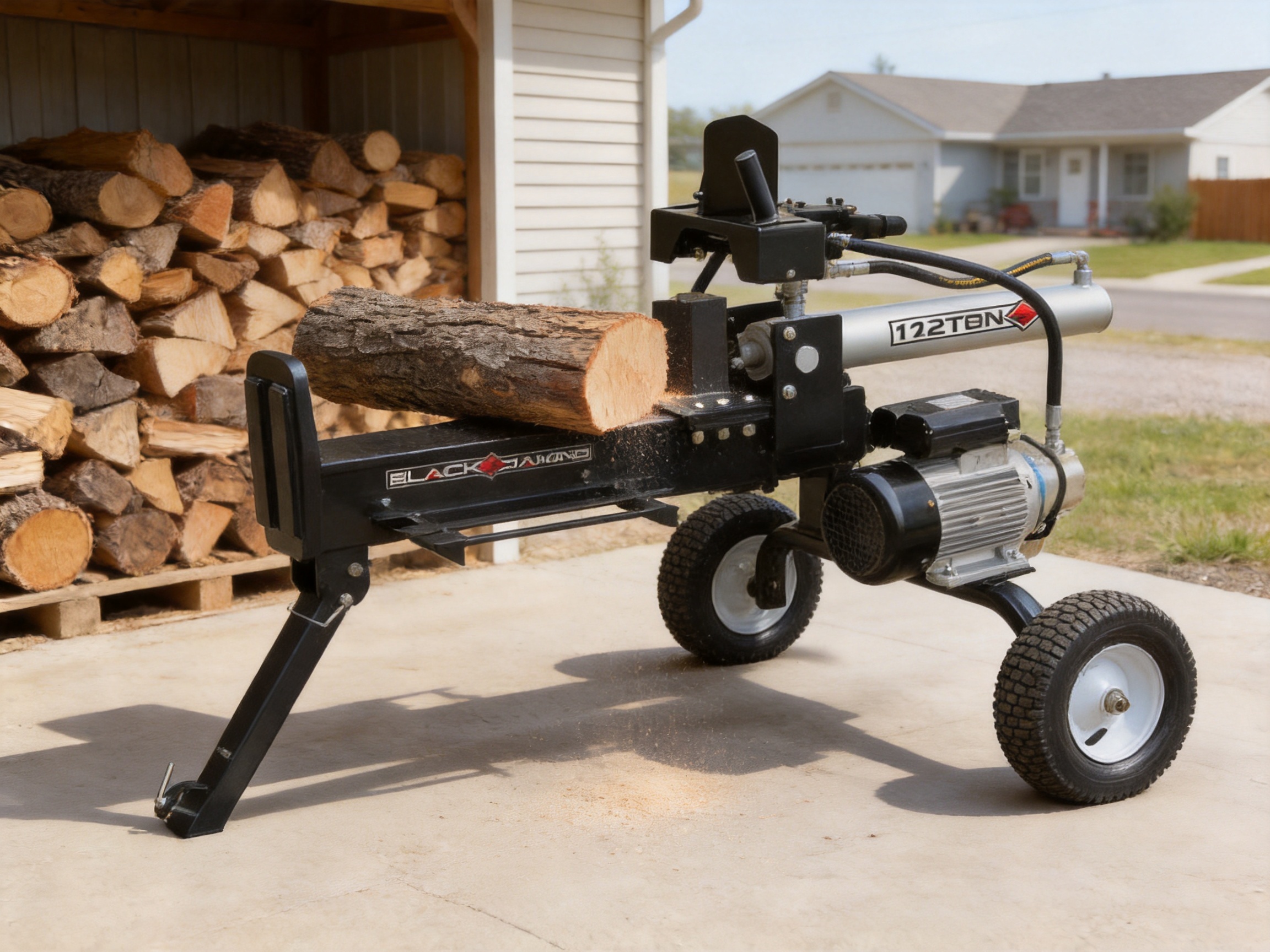
Advantages Over Many Alternative Splitter Types
Compared with Manual Splitting
Manual axes, mauls, and wedges remain useful for small quantities of relatively easy wood, but they require repeated physical effort and depend heavily on the user’s technique. A 12-ton powered splitter can reduce the number of high-impact swings and decrease fatigue during extended preparation sessions. It also provides a more repeatable force, which can be valuable when processing a large pile of firewood.
Manual tools have a low purchase cost and do not require electricity or hydraulic maintenance. However, they may be less suitable for users with limited upper-body strength, joint concerns, or large volumes of wood. The LSE12D occupies a practical position for people who want to process more wood with less physical strain while retaining a relatively simple machine format.
Compared with Smaller Electric Splitters
Small electric splitters are often lightweight and easy to store, but their lower force ratings can limit the diameter and species of wood they can process. The LSE12D’s 12-ton rating, two-stage pump, 2.2-kilowatt motor, and hardened steel wedge give it a stronger specification profile for users who need more than occasional light-duty splitting.
The trade-off is increased weight and a larger physical footprint. Buyers should decide whether the additional force and capacity justify the need for more storage space and a suitable electrical circuit. For users processing regular seasonal volumes, the additional capability may provide better long-term value than selecting a machine that is inexpensive but frequently pushed beyond its practical limits.
Compared with Gasoline-Powered Splitters
Gasoline splitters are often preferred for remote areas and heavy-duty outdoor work because they do not require grid electricity. They may also offer higher power levels in some product categories. However, they produce exhaust, require fuel storage, create more engine noise, and normally involve more routine engine maintenance.
The LSE12D’s electric drive is advantageous where clean, quiet, and convenient operation is a priority. It can be suitable for homeowners who prepare firewood near a building or workshop and do not want to manage gasoline. Electric starting is also simpler for many users than starting a small engine, especially after long periods of storage.
Compared with Vertical and Horizontal-Vertical Models
Some larger splitters allow both horizontal and vertical operation. This flexibility is useful when working with very heavy rounds. The LSE12D instead focuses on horizontal operation, which enables a more specialized and potentially simpler design. Buyers should choose according to their typical log size and handling method rather than assuming that more operating positions are always better.
For standard firewood lengths and manageable log diameters, a horizontal-only configuration can provide excellent workflow efficiency. If logs must be rolled rather than lifted, a vertical-capable model may be more appropriate. The key advantage of the LSE12D is focused design: a clearly defined operating position, a compact half-beam structure, and specifications matched to common residential firewood preparation.
Manufacturing Strengths and Quality Systems
Product performance begins with design, but manufacturing consistency determines whether the same performance can be reproduced across many units. Jiashan Superpower Tools Co., Ltd. specializes in outdoor power equipment and has operated since 1997. Its product range includes log splitters, dump carts, spreaders, lawn sweepers, lawn groomers, chippers, shredders, post pounders, stump grinders, tie rod cylinders, and PTO shafts.
This product breadth can support useful manufacturing synergies. A company experienced in hydraulic equipment, welded frames, wheels, outdoor machinery, and metal components can apply knowledge gained across several product categories. For buyers seeking private-label or distribution programs, a broad product platform may also simplify supplier communication and portfolio development.
The company reports operating under an ISO 9001:2015-certified quality management system. ISO 9001 focuses on documented quality processes, customer requirements, corrective action, process control, and continual improvement. Certification does not mean that every product is automatically perfect, but it indicates that the manufacturer has established a formal framework for managing quality rather than relying only on informal inspection.
For a hydraulic log splitter, a controlled quality process may include review of engineering drawings, incoming material checks, weld inspection, dimensional verification, hydraulic leak testing, electrical testing, functional testing, packaging inspection, and traceability of production batches. The specific procedures applied to the LSE12D should be confirmed with the supplier during a technical or purchasing review.
The company also states that many of its products carry CE certification. Certification and compliance requirements vary by destination market and product configuration. Importers should request current declarations, test documentation, labeling details, electrical specifications, and user manuals for the exact model and market version being purchased. Compliance should be evaluated before shipment, not after arrival.
The manufacturer’s location in Jiashan, Zhejiang Province, places it within an established manufacturing region with access to component suppliers, ports, engineering services, and export logistics. The facility is situated between Shanghai and Hangzhou, which can support international shipping and supplier coordination. Geographic access does not replace quality control, but it can contribute to more efficient procurement and export operations.
More than twenty years of industry experience can also support product refinement. Long-term manufacturers are able to collect service feedback, identify recurring failure modes, improve packaging, revise assembly instructions, and adjust components based on field experience. For distributors, this may reduce the risks associated with sourcing from a new or untested factory.
Production Processes Relevant to the LSE12D
Engineering and Product Development
A reliable splitter begins with a product design that considers force transmission, frame stability, hydraulic pressure, electrical safety, operator access, shipping dimensions, and maintenance. The half-beam structure must withstand repeated loading as the cylinder pushes the wedge through resistant wood. The hydraulic circuit must be sized to work with the motor and pump. Wheel placement must support movement without making the machine unstable.
Design work should also account for assembly efficiency. A product that can be assembled in under 30 minutes benefits consumers and distributors by lowering setup time. Clear component orientation, accessible fasteners, preassembled hydraulic parts where appropriate, and logical packaging all contribute to a better assembly experience.
Metal Fabrication and Welding
The frame and beam are central structural components. Controlled cutting, forming, drilling, and welding help ensure that the finished parts align correctly. Consistent weld penetration and appropriate surface preparation are important because the frame experiences repeated hydraulic loads and vibration.
After welding, dimensional checks can verify that the beam, cylinder mounts, wedge support, wheel brackets, and handle components are positioned correctly. Accurate alignment helps prevent uneven loading, excessive wear, and difficult assembly. Surface treatment and painting or powder coating can then provide protection against ordinary outdoor exposure, although users must still store the machine properly.
Hydraulic System Assembly
Hydraulic systems require careful cleanliness during assembly. Dirt, metal particles, and moisture can damage pumps, valves, and cylinder seals. Proper hose routing helps prevent abrasion, sharp bends, and interference with moving parts. Fittings should be tightened to the correct level, because over-tightening can damage threads while under-tightening may cause leaks.
Functional testing should include checking ram travel, return movement, control operation, pressure behavior, and visible leakage. A hydraulic system that appears acceptable at low load may behave differently under pressure, so an appropriate test procedure is important. Dealers and importers should ask whether every unit or a statistically controlled sample is tested and what records are retained.
Electrical Integration
The electric motor and control system must be matched to the destination market. Voltage, frequency, plug type, grounding, overload protection, switch design, and cable specifications all require attention. Electrical components should be protected from accidental contact and positioned so that normal operation does not expose them to unnecessary water or impact.
Electrical testing can include insulation checks, grounding verification, switch operation, motor start-up, and load performance. Users should never operate the machine with damaged cables, missing guards, wet electrical connections, or an unsuitable extension cord.
Final Inspection and Packaging
Final inspection should confirm that the correct model, labels, hardware, manual, and accessories are present. Packaging must protect the machine from vibration, impact, moisture, and shifting during export. The listed container quantity demonstrates the importance of efficient packaging for international distribution.
For commercial buyers, packaging quality is not merely a logistics concern. Damaged paint, bent components, missing fasteners, and scratched electrical housings create additional costs for dealers and reduce customer satisfaction. A manufacturer with established export experience is better positioned to optimize packaging through repeated shipment feedback.
Recommended Applications
The LSE12D is well suited to homeowners who use wood-burning stoves, fireplaces, outdoor boilers, or fire pits and who prepare their own firewood. It can also serve small farms, rural properties, seasonal camps, landscaping businesses, and small firewood operations that need moderate production capacity without moving to a larger commercial machine.
Its 21-inch log-length capacity accommodates many common firewood standards. Users can cut logs to a consistent length before splitting, which improves handling and helps establish a steady workflow. A level work area near the wood pile can reduce unnecessary lifting and movement.
The machine may also be attractive to equipment dealers and distributors. The product has a clear specification profile, a recognizable use case, a compact shipping package, and a motorized format that can complement other lawn and garden equipment. Its electric design may be especially appealing in markets where residential users prioritize low emissions, reduced noise, and easy starting.
It is less suitable for continuous industrial production, extremely large hardwood rounds, or remote locations without dependable electrical access. Those applications may require a higher-capacity commercial splitter, a vertical-capable machine, a tractor-powered unit, or a gasoline model. Correct application matching is essential for customer satisfaction and long service life.
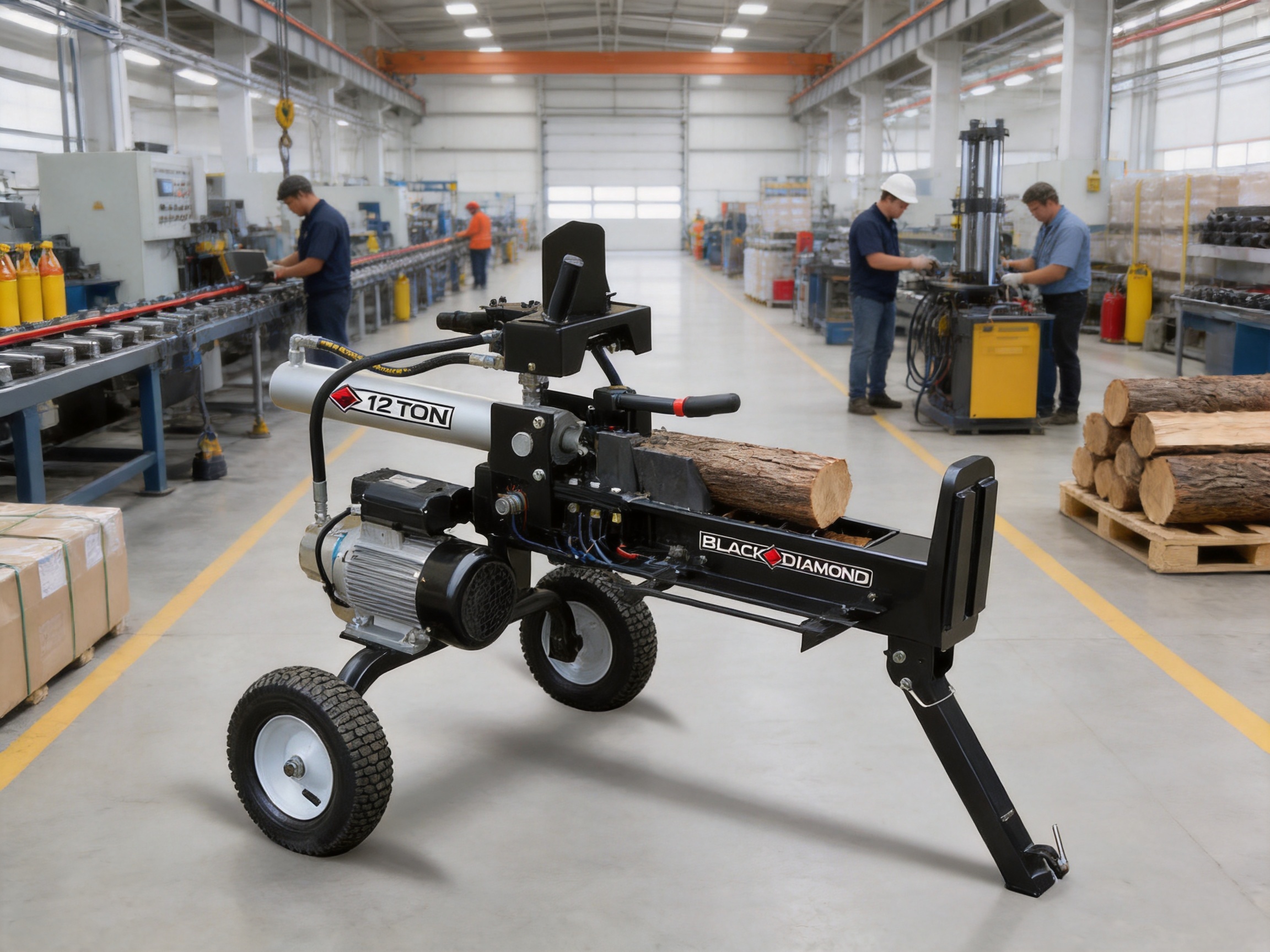
Operating Practices for Better Results
Before operation, place the splitter on a firm, level surface. Inspect the frame, wheels, wedge, cylinder, hoses, electrical cable, controls, and fasteners. Confirm that the hydraulic fluid is at the correct level and that there are no visible leaks. Remove debris from the working area and ensure that bystanders, children, and animals are at a safe distance.
Prepare logs within the stated length limit. Position each log securely and as centrally as practical on the beam. The grain direction, knots, branch stubs, and irregular ends can affect splitting behavior. Operators should keep hands away from the wedge and ram during the complete cycle and should never attempt to remove a stuck log while the machine is energized.
Do not exceed the maximum towing speed or use the splitter as a general-purpose trailer. If it must be moved, follow the manufacturer’s instructions and local regulations. Disconnect electrical power before performing maintenance, clearing a jam, inspecting the wedge, or working near moving components.
Productivity improves when logs are staged close to the splitter without blocking the operator. A second person may stack split wood, but that person must remain outside the danger zone and should understand the operating controls. Clear communication is important when more than one person is present.
Maintenance and Service Considerations
Routine maintenance is necessary even for an electric splitter. Hydraulic oil should be inspected and replaced according to the manufacturer’s service schedule and the requirements of the operating environment. The correct fluid grade should be used, and fluid should be kept clean during filling or replacement.
Hydraulic hoses and fittings should be checked for abrasion, cracking, loose connections, or leaks. Never use hands to search for a hydraulic leak because pressurized fluid can penetrate skin. A piece of cardboard or another safe inspection method can help identify a leak, but any suspected high-pressure leak should be handled by a qualified technician.
The wedge should be inspected for damage and excessive wear. A sharp, properly formed wedge can improve splitting efficiency, but sharpening or replacement should follow the manufacturer’s instructions. Excessive modification may affect the designed force path and could create unsafe conditions.
Bolts, wheel fasteners, frame connections, and guards should be checked periodically. Vibration and repeated loading can loosen hardware over time. The motor and electrical cable should remain clean and dry, and ventilation openings should not be blocked by dust or wood chips.
At the end of the season, clean the machine, protect exposed metal surfaces, inspect the hydraulic system, and store it under cover. Long-term storage should include protection against moisture and accidental electrical connection. A proper storage routine helps preserve both appearance and operating reliability.
Purchasing Guidance for Dealers and End Users
End users should first determine the typical log length, diameter, species, moisture condition, annual volume, and available power supply. The LSE12D is most appropriate when logs are within the 21-inch maximum length and when horizontal loading is acceptable. Buyers should also consider whether they have enough space to stage logs and stack split wood safely.
Dealers should confirm the exact motor configuration for the target country. Electrical products may require different voltage and frequency versions, plugs, labels, manuals, and certification documentation. It is also useful to request spare-parts information, warranty terms, packing lists, assembly instructions, and after-sales support procedures.
Importers should evaluate the manufacturer’s production capacity, quality system, inspection process, lead times, packaging standards, and ability to support repeat orders. The stated container quantity of 145 pieces per 40-foot container can assist with initial freight planning, but final logistics should be confirmed against the actual packaging configuration.
Private-label buyers should discuss branding, decals, manuals, color options, carton printing, compliance labels, replacement parts, and minimum order quantities before placing an order. Clear technical documentation reduces misunderstandings and helps ensure that the delivered product matches the sales specification.
A product sample or pre-shipment inspection can be valuable for commercial purchases. Inspection should cover dimensions, weld quality, paint finish, wheel assembly, hydraulic operation, electrical function, labels, documentation, and packaging. A structured inspection checklist gives both the buyer and manufacturer a clear reference point.
Frequently Asked Questions
What type of log splitter is the LSE12D?
The LSE12D is an electric hydraulic log splitter designed for horizontal operation only. It uses a 2.2-kilowatt motor, hydraulic pump, cylinder, and hardened steel wedge to split firewood.
How much splitting force does it provide?
The stated maximum splitting force is 12 tons. Actual performance depends on wood species, diameter, moisture, knots, grain direction, log positioning, hydraulic condition, and operating temperature.
What is the maximum log length?
The maximum stated log length is 21 inches, or approximately 540 millimeters. Logs should be cut to an appropriate length before loading and should not exceed the manufacturer’s limit.
Can the splitter operate vertically?
No. The supplied product information specifies horizontal-only operation. Buyers who need to process very heavy rounds without lifting them onto a beam should consider whether a vertical-capable model would better match their application.
How fast is the operating cycle?
The stated cycle time is 16 seconds. Actual production rate depends on how quickly the operator loads and removes logs, the type of wood, and the testing method used to measure the cycle.
What motor does the unit use?
The machine is specified with a 2.2-kilowatt electric motor. The exact voltage, frequency, plug, and electrical protection should be confirmed for the intended market before purchase.
What is the purpose of the two-stage pump?
A two-stage pump is intended to provide faster flow during low-resistance ram movement and higher-pressure operation when the wedge encounters difficult wood. This design can help balance cycle speed and splitting force.
How much hydraulic fluid does it hold?
The stated hydraulic capacity is 1.85 gallons, or approximately 7 liters. The user should verify the fluid level and use the correct hydraulic oil specified in the operating documentation.
Is the machine easy to move?
The splitter has 13-inch wheels and a net weight of approximately 231.5 pounds. It is movable on suitable surfaces, but users should exercise care because it is a substantial piece of equipment. The stated maximum towing speed is 5 miles per hour, subject to local rules and the manufacturer’s instructions.
Is it suitable for professional firewood production?
It can be suitable for small-scale or light commercial firewood work, depending on the volume and wood type. Continuous industrial production or very large hardwood rounds may require a larger commercial splitter with higher capacity and additional operating features.
What quality credentials does the manufacturer report?
Jiashan Superpower Tools Co., Ltd. reports operation under an ISO 9001:2015-certified quality management system and states that many of its products carry CE certification. Buyers should request current documentation for the exact model and destination market.
What should be checked before operation?
Users should inspect the frame, wedge, cylinder, hoses, hydraulic fluid, wheels, electrical cable, controls, guards, and fasteners. The machine should be placed on firm, level ground, and the work area should be cleared of unnecessary people and obstacles.
Does electric operation eliminate all maintenance?
No. Electric operation removes many engine-related tasks, but the hydraulic system, wedge, frame, wheels, fasteners, motor, cable, and controls still require inspection and maintenance.
Conclusion
The Black Diamond 12ton ELECTRIC Log Splitter LSE12D is designed to provide a balanced solution for users who need more capability than a small entry-level electric splitter but do not want the fuel, exhaust, and engine maintenance associated with many gasoline machines. Its 12-ton maximum force, 2.2-kilowatt motor, 16-second cycle time, two-stage pump, 21-inch log capacity, hardened steel wedge, and 13-inch wheels create a specification package suited to residential firewood preparation and selected small-scale commercial applications.
The horizontal-only format and half-beam design keep the product focused and relatively straightforward. The design is especially attractive for users who work with standard firewood lengths and can lift logs onto the beam. Buyers handling very heavy rounds or operating far from an electrical supply should compare the machine with vertical-capable or gasoline-powered alternatives.
From a sourcing perspective, the product benefits from a manufacturer with a broad outdoor power equipment portfolio, long-term industry experience, export capability, and a reported ISO 9001:2015-certified quality management system. The company’s experience across hydraulic, welded, wheeled, and garden equipment can support consistent production and product development.
As with any powered machine, correct application, safe operation, proper electrical preparation, and regular maintenance are essential. When matched with suitable logs, a dependable power supply, and a controlled working area, the LSE12D offers a practical, convenient, and efficient approach to seasonal wood splitting.
References
1. Product specification sheet for the LSE12D electric hydraulic log splitter, supplied by the manufacturer.
2. Manufacturer information for Jiashan Superpower Tools Co., Ltd., including company history, product categories, quality management, and international market coverage.
3. ISO 9001:2015, Quality Management Systems—Requirements.
4. General principles of hydraulic power transmission, cylinder sizing, pump flow, pressure, and maintenance.
5. General outdoor power equipment safety practices for log handling, hydraulic machinery, electrical equipment, and powered cutting or splitting tools.
6. General guidance concerning electrical product conformity, destination-market requirements, labeling, user documentation, and pre-shipment inspection.
Product: Black Diamond 12ton ELECTRIC Log Splitter LSE12D
PREV:80 lb Push Spreader: Precision, Durability, and Efficient Lawn Care Performance
NEXT:Compact Towable Backhoe with 10-Inch Bucket: Capabilities, Manufacturing Strengths, and Practical Applications
NEXT:Compact Towable Backhoe with 10-Inch Bucket: Capabilities, Manufacturing Strengths, and Practical Applications
Interested in cooperation or have questions?
Related products
-
-
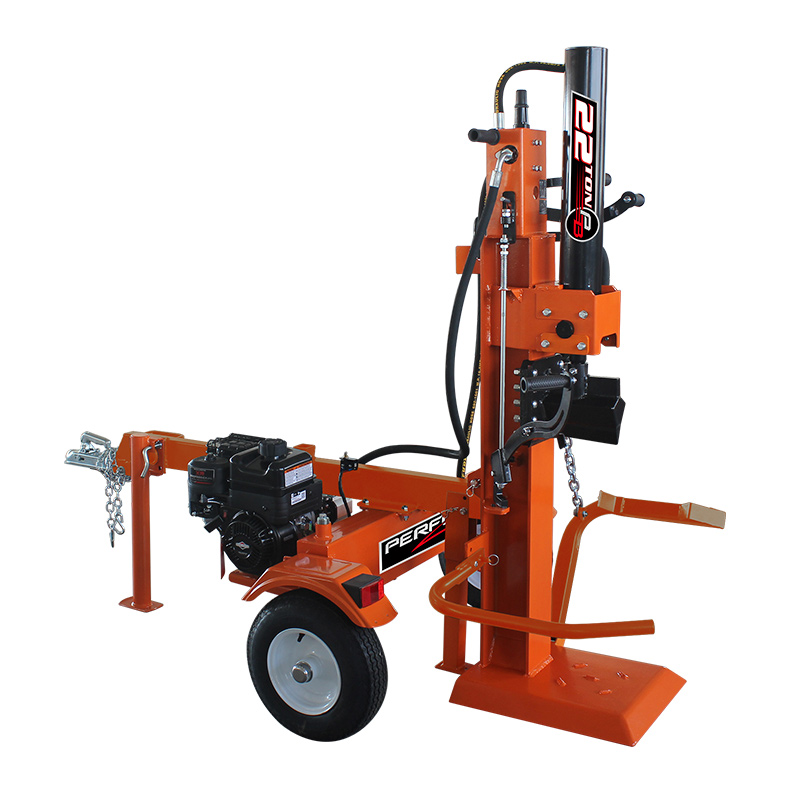
Vertical operation position onlyHardened steel wedge24"/61cm split len...
See Details -
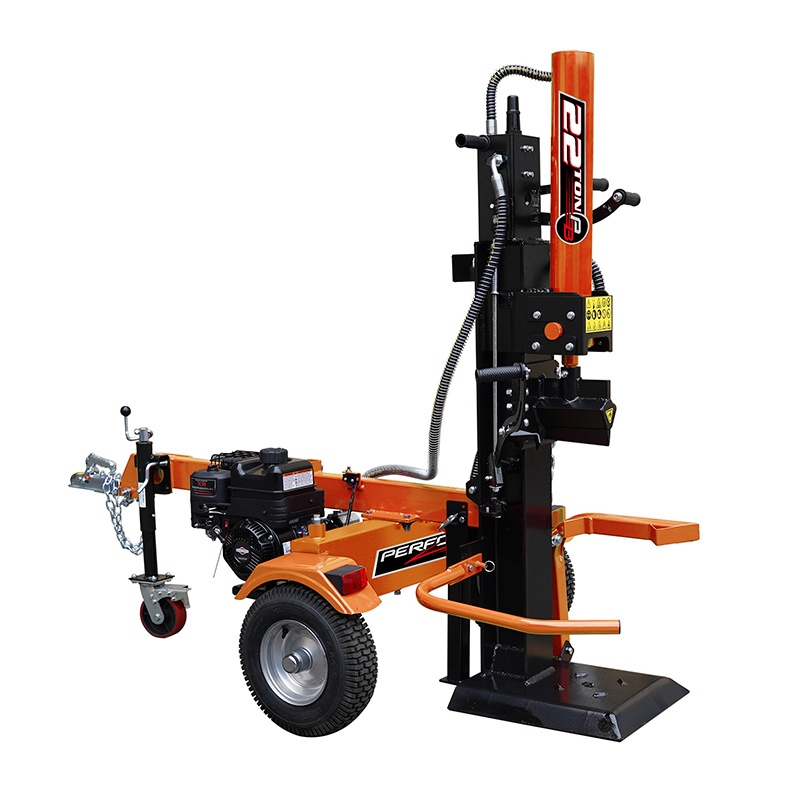
Vertical operation position onlyHardened steel wedge24"/61cm split len...
See Details -
DESCRIPTION Accommodates splitting in horizontal only Half beam design...
See Details