 LANGUAGE
 English
 Deutsch
 Español
 Français
 русский

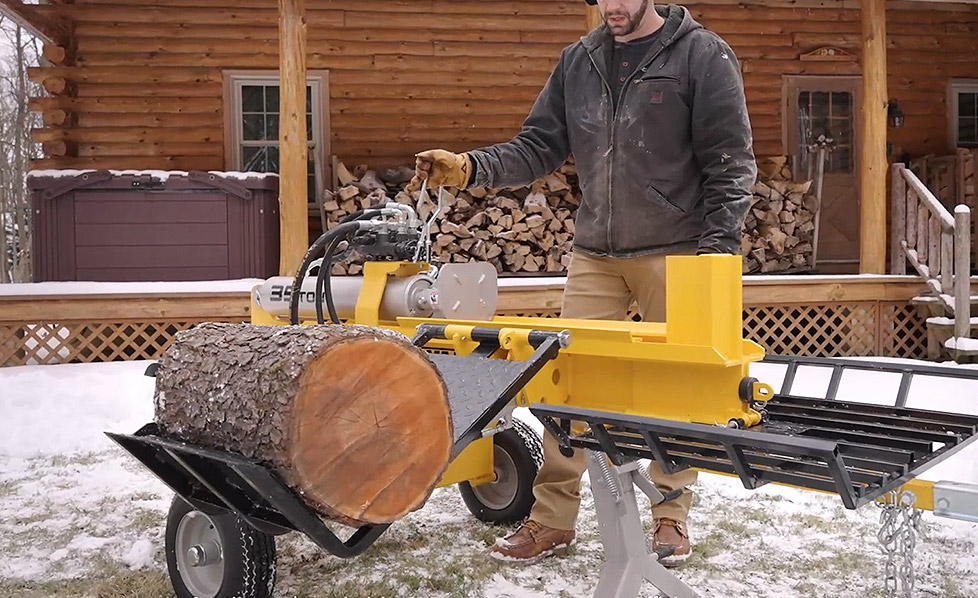
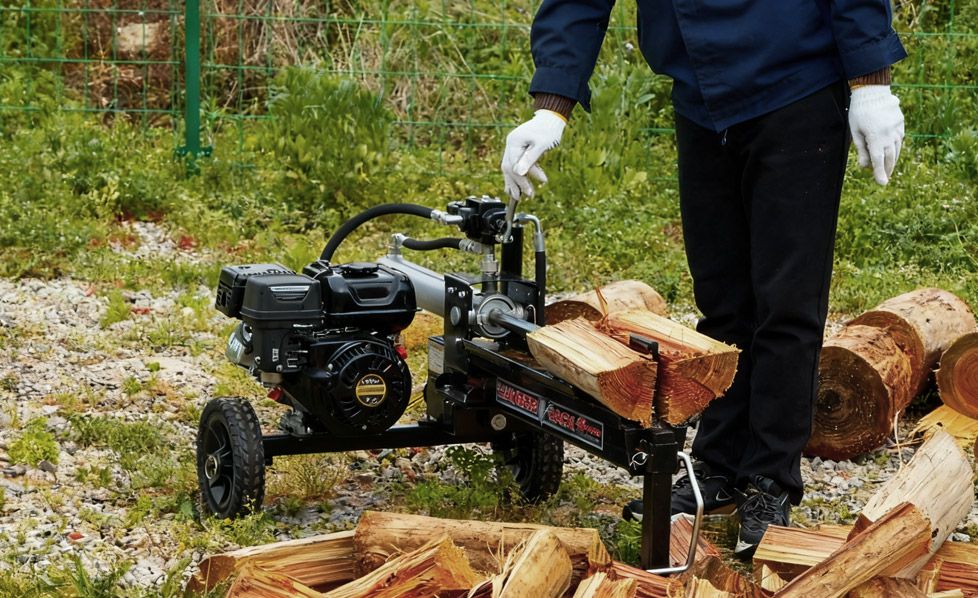



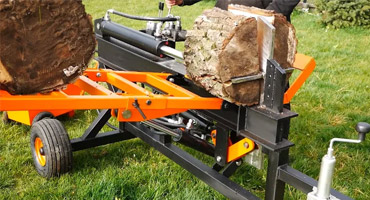






●40-Volt Brushless MotorThis reliable motor is highly efficient provid...
See Details
20-Ton Battery-Powered Log Splitter: Performance, Efficiency, and Manufacturing Quality
Firewood preparation is becoming increasingly demanding for homeowners, property managers, farm operators, and professional outdoor power equipment dealers. Traditional manual splitting requires significant physical effort, while many fuel-powered machines create noise, exhaust emissions, and maintenance requirements. The 20-ton battery-powered log splitter models LSD2001 and LSD2003 provide a modern alternative by combining substantial hydraulic splitting force with a quiet, brushless electric drive system.
Designed for efficient processing of firewood and manageable logs, these machines deliver up to 20 tons of splitting force, a 9-second cycle time, and a maximum log length of 21 inches, or 530 millimeters. Both models use a 60-volt, 2.2-kilowatt brushless motor and two 60-volt, 10-ampere-hour batteries. This configuration provides the working capability expected from a serious log splitter while avoiding many of the inconveniences associated with gasoline engines.
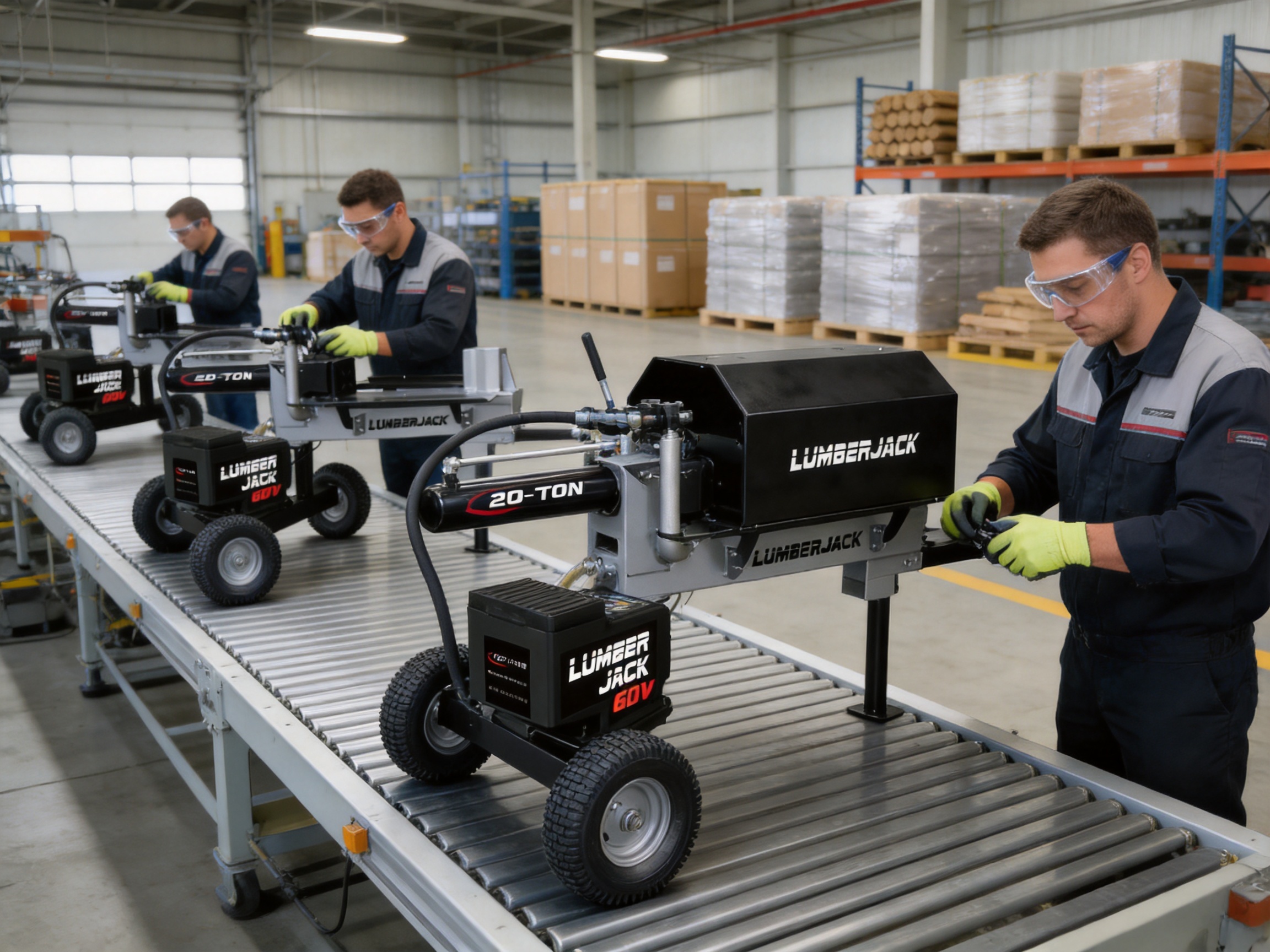
The LSD2001 and LSD2003 are manufactured by Jiashan Superpower Tools Co., Ltd., an established producer of log splitters, lawn and garden equipment, and outdoor power machinery. With a manufacturing history beginning in 1997, the company combines product development experience, ISO 9001:2015 quality management, export capability, and a broad equipment portfolio. These strengths support a product approach focused on reliable performance, practical design, energy efficiency, and long-term value.
Why Battery-Powered Log Splitting Is Becoming More Important
Log splitting has traditionally relied on either human force or gasoline-powered hydraulic systems. Manual tools remain useful for small quantities of wood, but they become inefficient when users must prepare large volumes or work with dense hardwood. Gasoline-powered splitters offer greater force, yet they also introduce fuel storage, engine maintenance, exhaust, vibration, and noise.
Battery-powered equipment addresses several of these concerns. An electric motor can start immediately without pull cords, choke adjustments, fuel mixing, or engine warm-up. The push-button starting system used by the LSD2001 and LSD2003 makes operation straightforward and reduces the number of steps required before work begins.
Battery power also supports quieter operation. This is particularly valuable in residential areas, campgrounds, farms, rural properties, and locations where noise can disturb occupants or nearby neighbors. Although hydraulic splitting still creates mechanical sound, the absence of a gasoline engine significantly reduces the overall operating noise and eliminates direct engine exhaust at the work location.
The battery-powered design is also suitable for users who want to reduce routine maintenance. A brushless motor contains fewer wear-prone components than a conventional brushed motor and does not require the same engine-related service tasks as a gasoline power unit. Users still need to inspect hydraulic components, maintain the machine according to its operating instructions, and keep the splitting area safe, but many engine-specific maintenance tasks are removed.
Core Product Capabilities
The primary strength of the LSD2001 and LSD2003 is the balance between force, cycle speed, battery power, and log capacity. Each model is rated at 20 tons of maximum splitting force. This gives the machine the capability to process substantial firewood logs that would be difficult or tiring to split manually.
The machines accept logs up to 21 inches, or 530 millimeters, in length. The product specification also identifies a maximum log diameter of approximately 9.85 inches, or 25 centimeters. Actual performance can depend on wood species, moisture content, grain direction, knots, temperature, and log shape. Nevertheless, the stated capacity positions the machines for common residential, agricultural, and small commercial firewood applications.
A 9-second cycle time allows the operator to work at a steady pace. Cycle time is an important productivity measurement because it indicates how quickly the ram can complete a forward and return sequence. Faster cycles can reduce waiting between logs, helping users process more firewood during a work session.
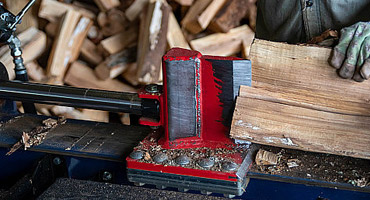
The 6.3-inch hardened-steel wedge is designed to withstand repeated contact with wood. Hardened steel provides a durable working edge and helps the wedge maintain its structural integrity during regular splitting operations. The wedge dimensions are shared by both models, supporting consistent performance across the product range.
Technical Specifications
| Specification | LSD2001 | LSD2003 |
| Maximum splitting force | 20 tons | 20 tons |
| Cycle time | 9 seconds | 9 seconds |
| Motor and battery system | 60V, 2.2kW brushless motor; 60V 10Ah × 2 batteries | 60V, 2.2kW brushless motor; 60V 10Ah × 2 batteries |
| Maximum log length | 21 inches / 530 millimeters | 21 inches / 530 millimeters |
| Cylinder | 3-1/2 inches × 19-3/8 inches | 3-1/2 inches × 19-3/8 inches |
| Pump | 7 GPM, two-stage | 7 GPM, two-stage |
| Hydraulic capacity | 3.7 gallons / 14 liters | 3.7 gallons / 14 liters |
| Wedge | 6.3-inch hardened steel | 6.3-inch hardened steel |
| Wheel size | 13 inches × 5.0-6 | 13 inches × 5.0-6 |
| Net/gross weight | 275.6/352.7 pounds; 125/160 kilograms | 315.3/396.8 pounds; 143/180 kilograms |
| Package dimensions | 46 × 28 × 24.8 inches; 117 × 71 × 63 centimeters | 47.6 × 44.5 × 19.7 inches; 121 × 113 × 50 centimeters |
| Container quantity | 104 pieces per 40-foot high-cube container | 90 pieces per 40-foot high-cube container |
The two models share the same splitting force, cycle time, motor rating, battery configuration, cylinder, pump, hydraulic capacity, wedge, and wheel specification. Their principal differences are weight and package dimensions. LSD2001 has a net weight of 275.6 pounds, or 125 kilograms, while LSD2003 has a net weight of 315.3 pounds, or 143 kilograms. The gross shipping weights are 352.7 pounds and 396.8 pounds respectively.
These differences may reflect different product configurations, frame arrangements, protective packaging, or market requirements. Dealers can therefore select the model that best matches their logistics plans, distribution channels, and customer preferences.
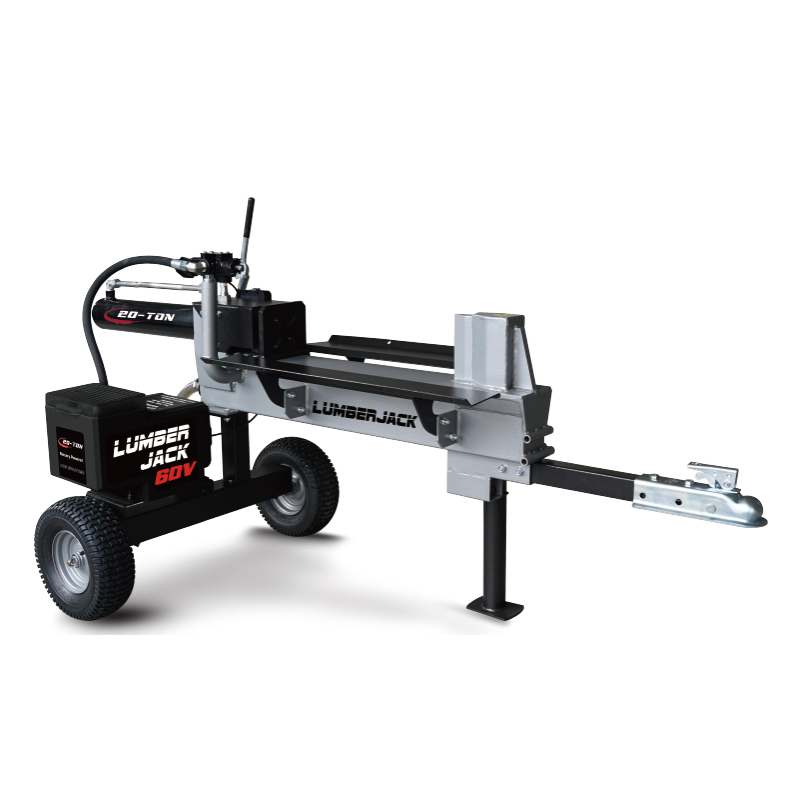
20 Ton Battery Powered Log Splitter LSD2001/LSD2003
The 60-Volt Brushless Power System
The 60-volt, 2.2-kilowatt brushless motor is the center of the machine’s electric power system. A motor of this rating supplies the energy required to drive the hydraulic pump while maintaining a compact and relatively clean power unit. The use of two 60-volt, 10-ampere-hour batteries provides the specified battery configuration for both models.
Brushless motor technology offers several practical advantages. Because electronic controls replace physical brushes for commutation, the motor can operate with reduced brush wear. This can support longer service life and more consistent operation when compared with conventional brushed motor designs. The absence of brushes also reduces one source of friction and maintenance.
Electric motors deliver power without the fuel system, carburetor, spark plug, muffler, and oil circulation system found on gasoline engines. This simplifies the operating concept. The user can install or charge the batteries according to the operating instructions, press the start control, and begin work without managing gasoline or engine tuning.
Push-button starting is especially useful for users who may find recoil starting difficult. It also supports a more predictable startup routine for rental businesses, landscaping companies, property maintenance teams, and homeowners. A simple starting process can reduce operator frustration and help different users operate the equipment consistently.
The battery system also allows the splitter to be used in locations where access to an electrical outlet is limited or unavailable. This can be valuable in wooded areas, remote properties, agricultural fields, and firewood processing sites. Since the machine does not need to remain connected to a power cable during operation, the work area can be arranged with greater flexibility.
Battery performance will naturally vary according to log hardness, ambient temperature, battery condition, hydraulic load, operating technique, and charging practices. For that reason, users should follow the supplied battery and charger instructions and plan work sessions appropriately. The product’s principal benefit is not only battery capacity, but the combination of cordless operation and hydraulic splitting force.
Hydraulic System Designed for Practical Productivity
The hydraulic system includes a 3-1/2-inch by 19-3/8-inch cylinder, a 7-gallon-per-minute two-stage pump, and a 3.7-gallon, or 14-liter, hydraulic capacity. These components work together to convert motor power into controlled linear force at the wedge.
A two-stage pump is useful because it can support different operating conditions during the splitting cycle. In lighter-load portions of the movement, the pump can support faster hydraulic flow. When the wedge encounters greater resistance, the system can shift toward the high-pressure stage needed to develop splitting force. This arrangement helps balance speed and force rather than designing the machine only for maximum pressure or only for rapid movement.
The 9-second cycle time reflects the benefit of coordinating the electric motor, pump, cylinder, and control system. A high force rating is valuable, but productivity also depends on how quickly the machine resets for the next log. The LSD2001 and LSD2003 are therefore designed as working tools rather than simply high-force demonstration machines.
The 14-liter hydraulic capacity provides a substantial fluid reservoir for the system. Proper hydraulic fluid level and condition are essential to performance. Operators should inspect for leaks, follow the recommended fluid specifications, and maintain the machine in accordance with the owner’s manual. Hydraulic maintenance should not be neglected simply because the power source is electric.
The cylinder dimensions provide the travel required for the stated log length. A 19-3/8-inch cylinder specification is suitable for a machine designed to work with logs up to 21 inches long, subject to the machine’s operating geometry and safety design. The complete hydraulic assembly must be treated as an integrated system, with the pump, cylinder, hoses, fittings, valve, reservoir, and wedge working together.
Force and Cycle Time in Real-World Use
Maximum splitting force is an important rating, but it should not be interpreted as a guarantee that every log will split in the same manner. Wood varies significantly. Straight-grained, properly positioned logs may split quickly, while knotty, twisted, frozen, oversized, or unusually dense pieces may require more time or may exceed the recommended operating range.
The best results come from using logs within the specified length and diameter limits, placing them securely on the splitting bed, and keeping the wedge aligned with the grain whenever possible. Operators should never attempt to force unsuitable material into the machine or use improvised methods to increase pressure.
When used within its intended capacity, the 20-ton rating gives the machine a meaningful advantage over manual splitting tools. It also provides a practical alternative to larger, fuel-powered commercial splitters for users who do not need to process extremely large logs or operate continuously throughout the day.
Design Advantages Compared with Conventional Alternatives
The LSD2001 and LSD2003 compete in a market that includes manual splitters, gasoline-powered hydraulic splitters, corded electric splitters, and other battery-powered machines. Each category has a place, but the battery-powered 20-ton design offers a combination of features that can be attractive to a broad range of users.
Advantages over Manual Splitting
Manual splitting depends on repeated swinging, lifting, and positioning. This can place considerable strain on the back, shoulders, arms, wrists, and hands. The hydraulic system performs the primary splitting work, allowing the operator to concentrate on positioning logs and managing the work area.
The electric system also provides repeatable mechanical force. Unlike a hand tool, whose performance depends heavily on the user’s strength and technique, the splitter supplies a consistent force rating through the hydraulic circuit. This can improve productivity and reduce physical fatigue during longer work sessions.
Advantages over Gasoline-Powered Splitters
Gasoline machines remain useful where extended high-output operation is required, but they often involve fuel purchasing, fuel storage, engine oil changes, spark plug inspection, air filter service, and carburetor maintenance. The battery-powered design avoids these engine-related tasks.
The push-button start is another important difference. Users do not need to pull a recoil starter or adjust a choke. The electric motor also produces no direct exhaust emissions at the point of use. This can be advantageous in enclosed or semi-enclosed work areas, although all hydraulic machinery should still be used in a properly ventilated and safe environment.
Lower operating noise can improve comfort and reduce disturbance. This does not make the machine silent, since the hydraulic pump and moving components still generate sound, but removing the gasoline engine can make the work environment more pleasant.
Advantages over Corded Electric Splitters
A corded splitter can be convenient near a suitable electrical outlet, but the power cable may restrict movement and create a trip hazard. The cordless battery design provides greater freedom for outdoor work. Operators can position the machine closer to the woodpile or move between work areas without managing an extension cord.
The 60-volt platform also provides a substantial electrical system for a hydraulic machine. This helps distinguish the product from low-voltage equipment intended only for small or occasional logs. The 20-ton force rating places the models in a more capable category than many light-duty electric splitters.
Advantages over Smaller Battery Splitters
Some battery-powered splitters are designed for small logs, camping use, or light residential workloads. The LSD2001 and LSD2003 offer a higher 20-ton splitting force, a 2.2-kilowatt motor, a two-stage 7-GPM pump, and a maximum log length of 21 inches. These specifications make them more suitable for serious firewood preparation.
The product also includes a hardened-steel wedge and a relatively large hydraulic reservoir. Together with the substantial machine weight, these characteristics support a durable, stable working platform. The machine is not intended to be a lightweight hand-carried tool; its greater mass is part of its ability to handle demanding splitting work.
Stable Construction and Mobility
The 13-inch by 5.0-6 wheels are designed to support movement around the operating site. A log splitter must be positioned close enough to the wood supply to reduce unnecessary lifting and carrying. Suitable wheels can make it easier to reposition the machine on firm ground.
Because the models weigh between 275.6 and 315.3 pounds net, users should plan movement carefully. The weight contributes to stability during hydraulic operation, but it also means that transportation may require appropriate equipment or more than one person. Operators should move the machine on suitable surfaces, secure it during transport, and observe all handling instructions.
The difference in weight between LSD2001 and LSD2003 may be relevant to dealers and end users. Users who prioritize easier handling may prefer the lighter configuration, while users who prioritize a particular frame or packaging arrangement may select the heavier model. The best choice depends on the intended application and distribution requirements.
Stable positioning is essential for safe splitting. The machine should be placed on firm, level ground with sufficient clearance around the operator, log supply, and finished firewood. Sloping, wet, soft, or cluttered ground can increase the risk of movement or loss of balance.
Manufacturing Strengths and Quality Management
Product capability depends not only on the design specifications but also on how consistently the machine is manufactured. Jiashan Superpower Tools Co., Ltd. has specialized in log splitters and lawn and garden equipment since 1997. More than two decades of experience provide a foundation for understanding hydraulic equipment, outdoor working conditions, export requirements, and dealer expectations.
The company operates under an ISO 9001:2015-certified quality management system. This type of system establishes a structured approach to quality planning, process control, documentation, inspection, corrective action, and continuous improvement. Certification does not eliminate the need for product-specific testing, but it demonstrates that quality management is organized as an ongoing business process rather than an occasional final inspection.
Manufacturing a log splitter requires coordination among multiple processes. Steel components must be formed and assembled accurately. Hydraulic cylinders, pumps, valves, hoses, and fittings must be integrated correctly. Electrical components, battery interfaces, controls, and motor assemblies must be installed with appropriate attention to connection quality and protection.
Quality control is particularly important in a product that combines high hydraulic force with electrical energy. A robust manufacturing process should address frame alignment, weld quality, paint or surface protection, fastener security, hydraulic sealing, electrical connections, control operation, and functional performance. Consistent inspection helps reduce variation between units and supports reliable dealer service.
Integrated Product Development
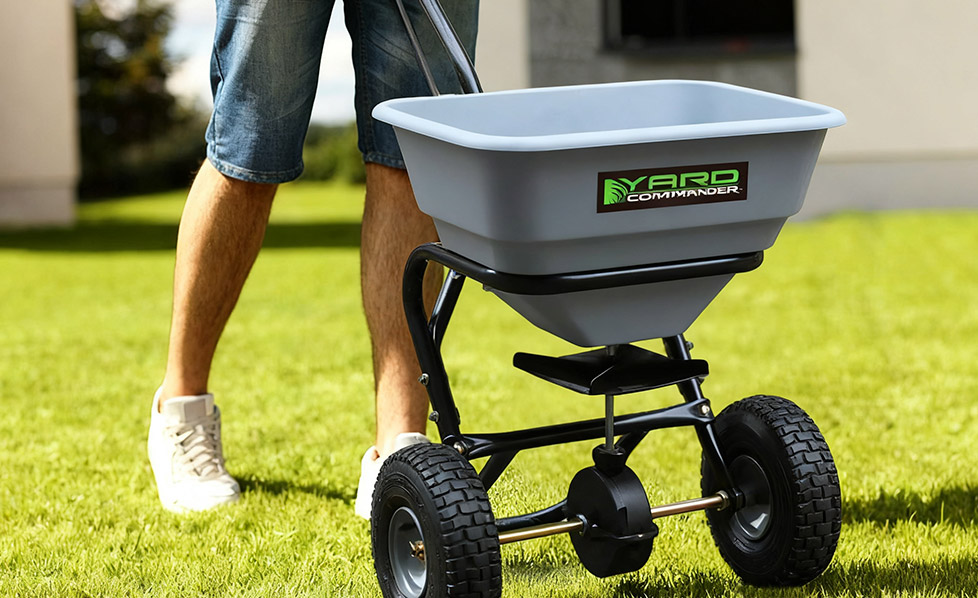
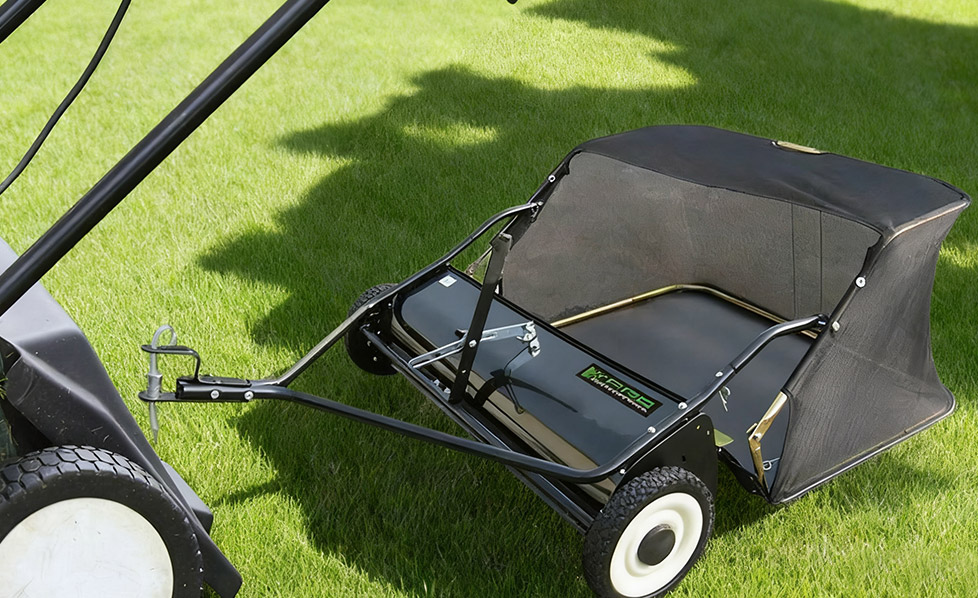
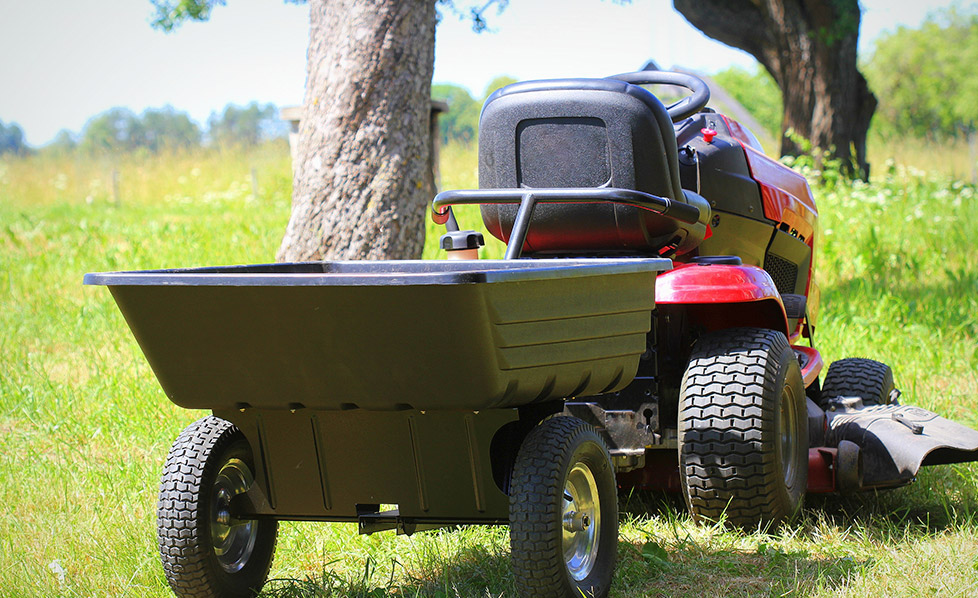
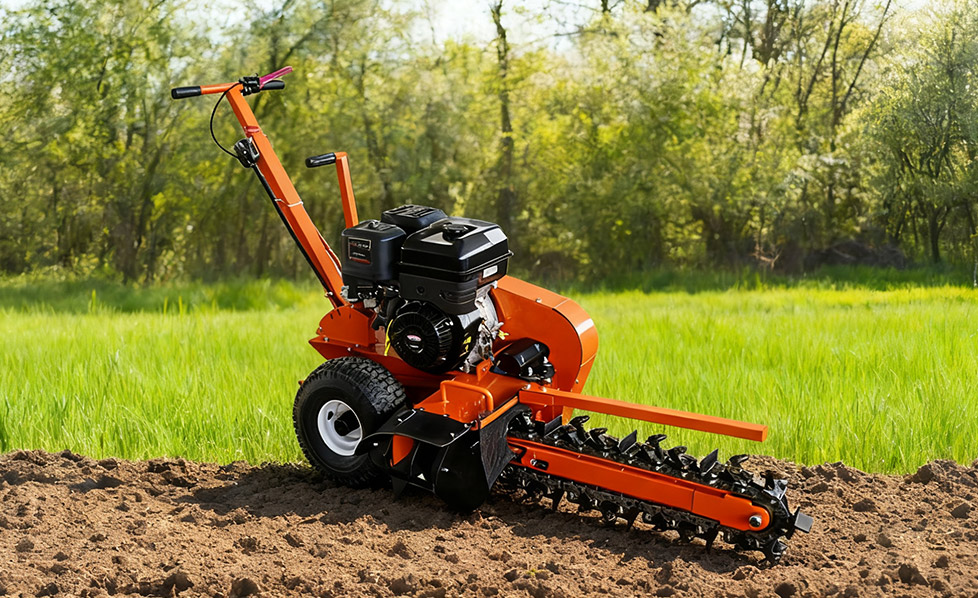
The company’s product range includes log splitters, dump carts, spreaders, lawn sweepers, lawn aerators, lawn groomers, chipper shredders, post pounders, stump grinders, tie rod cylinders, PTO shafts, and other outdoor power equipment. This broad portfolio indicates experience across mechanical, hydraulic, agricultural, and lawn-care applications.
Such product diversity can support practical engineering knowledge. Different product categories require an understanding of load-bearing structures, wheels and axles, hydraulic systems, power transmission, outdoor corrosion exposure, operator controls, and packaging. The knowledge gained across these categories can contribute to the development of robust outdoor equipment.
The battery-powered log splitter reflects an effort to combine established hydraulic technology with newer electric power systems. This approach responds to changing customer expectations for quieter, cleaner, and lower-maintenance equipment without sacrificing the force required for demanding work.
Factory Location and Supply Chain Advantages
The manufacturing facility is located in the Huimin Economic Development Zone in Jiashan County, Zhejiang Province, between Shanghai and Hangzhou. This location provides access to established manufacturing infrastructure, transportation networks, component suppliers, ports, and export services.
For international buyers, supply chain capability is an important part of product value. The listed container quantities of 104 units per 40-foot high-cube container for LSD2001 and 90 units for LSD2003 provide a useful basis for shipping and inventory planning. Exact loading quantities may vary according to packaging configuration and shipping requirements, but the published figures help distributors estimate order capacity.
Export experience can also help a manufacturer understand documentation, packaging, product labeling, certification requirements, and regional market expectations. Superpower products serve customers across North America, Europe, Australia, Asia, and South America. This international orientation supports communication with importers, dealers, private-label customers, and outdoor power equipment distributors.
Energy Efficiency and Environmental Considerations
The battery-powered configuration supports a cleaner operating environment than a gasoline engine because it does not produce direct exhaust at the work location. This is valuable for users who want to reduce fuel handling and avoid engine fumes during routine firewood preparation.
Electric motors can also be efficient because they convert electrical energy directly into mechanical rotation without combustion. The brushless design helps reduce certain sources of mechanical wear and can provide a consistent power delivery system when matched with suitable electronic controls and batteries.
Environmental performance should be considered across the product’s full service life. Responsible battery charging, proper storage, hydraulic fluid management, and end-of-life recycling are all important. Users should follow local requirements for battery disposal and hydraulic fluid handling. The machine’s environmental advantage is strongest when it is maintained correctly and used for many productive seasons.
The company describes its product development focus as innovative, energy-efficient, environmentally friendly, and cost-effective. The LSD2001 and LSD2003 align with these goals by replacing a gasoline engine with a cordless electric power system while retaining a high-force hydraulic mechanism.
Applications for Different Users
Residential Firewood Preparation
Homeowners who heat with wood or use a fireplace, wood stove, fire pit, or outdoor boiler can use a 20-ton splitter to prepare firewood more efficiently. The 21-inch maximum log length accommodates many common firewood pieces, while the cordless design permits operation away from the house or garage.
The relatively quiet operation is useful in residential environments. Users can schedule work without the same level of noise associated with a gasoline engine. Nevertheless, operators should still observe local noise rules and maintain a safe distance from children, pets, buildings, and bystanders.
Farms and Rural Properties
Rural property owners often have access to fallen trees, pruned branches, and harvested wood but may not have convenient access to electrical outlets near the work site. A battery-powered splitter can be transported to the wood rather than requiring all logs to be carried to a fixed processing area.
The machine can also support seasonal firewood preparation. Its hydraulic force and 9-second cycle time make it more practical for larger volumes than manual splitting, while its electric power system reduces the need to maintain a separate gasoline engine.
Landscaping and Property Maintenance
Landscaping businesses, tree-care contractors, and property maintenance teams may generate logs and rounds as part of pruning or removal work. A splitter can turn suitable wood into usable firewood or reduce the need to dispose of manageable pieces through other methods.
Professional users should evaluate expected daily volume, battery charging access, transport capacity, and service support before selecting equipment. The LSD2001 and LSD2003 are suited to users who need strong hydraulic performance and cordless flexibility rather than extremely high-volume industrial processing.
Equipment Dealers and Distributors
Dealers can position these models within the growing category of battery-powered outdoor power equipment. The products offer a clear sales message: 20 tons of splitting force, a brushless motor, push-button starting, cordless operation, and a 9-second cycle time.
The availability of two configurations enables dealers to offer a choice based on weight, package dimensions, customer requirements, and distribution strategy. The manufacturer’s experience with international markets and its broad product range can also support dealers seeking a long-term equipment supplier rather than a single isolated product.
Safety and Responsible Operation
A log splitter combines high force, moving parts, sharp steel, hydraulic pressure, and electrical energy. Safe operation requires careful preparation and adherence to the owner’s manual. The machine should be used only by trained adults who understand its controls and operating limits.
Logs should be inspected before splitting. Remove loose branches, foreign objects, and materials that could become projectiles. Logs should be positioned securely and kept within the specified size range. Operators should never place hands, feet, tools, or other body parts near the wedge or moving ram during operation.
Appropriate personal protective equipment should be used. Safety glasses or a face shield can help protect against chips and debris. Gloves may protect hands during log handling, while sturdy footwear can reduce the risk of injury from falling wood. Hearing protection may still be appropriate depending on the surrounding noise level and operating duration.
The machine should be inspected before each use. Check the hydraulic fluid level, hoses, fittings, cylinder, wedge, wheels, frame, fasteners, battery connections, and control components. Any hydraulic leak, damaged cable, loose fastener, cracked weld, or malfunctioning control should be addressed before work begins.
Battery packs should be charged, stored, and handled according to the battery manufacturer’s instructions. Batteries should not be exposed to unauthorized modification, excessive heat, water intrusion, or impact. The charger should be used in a suitable location and disconnected as directed after charging.
Never attempt to increase the machine’s pressure beyond the manufacturer’s specification. Do not modify the wedge, bypass safety controls, operate without required guards, or use accessories that have not been approved for the equipment. Modifications can reduce reliability and create serious hazards.
Maintenance Practices for Long-Term Value
Although the brushless electric motor reduces engine maintenance, the splitter still requires regular care. Hydraulic equipment depends on clean fluid, secure fittings, intact seals, and properly maintained moving parts. Dirt and moisture should be kept away from exposed connections and control areas.
After use, the machine should be cleaned of wood chips, bark, mud, and debris. The wedge and splitting bed should be inspected for damage. The wheels and frame should be checked if the machine has been moved over rough ground. Any unusual noise, vibration, slow movement, or loss of force should be investigated before further operation.
Hydraulic fluid should be monitored according to the recommended maintenance schedule. Using the correct fluid and replacing it at the appropriate interval helps protect the pump, cylinder, valve, and seals. Hydraulic hoses should be inspected for abrasion, cracking, swelling, or leakage. Pressurized fluid can be dangerous, so leaks should never be checked with bare hands.
Fasteners can loosen through vibration and repeated use. Periodic inspection of bolts, nuts, wheel hardware, and structural connections is important. The hardened-steel wedge should remain properly secured and should not be altered by unauthorized grinding or welding.
Batteries should be stored in a clean, dry location within the temperature range specified by the battery manufacturer. Long-term storage procedures may include partial charging or other recommendations. Following these instructions can help preserve battery capacity and reduce the risk of damage.
Consistent maintenance protects productivity as well as safety. A well-maintained splitter is more likely to deliver predictable cycle times, stable hydraulic performance, and a longer useful service life.
Purchasing Considerations for Commercial Buyers
When evaluating a battery-powered log splitter, buyers should look beyond the headline force rating. The motor, pump, cylinder, battery system, cycle time, wedge, wheels, machine weight, packaging, and service support all influence the total value of the equipment.
The LSD2001 and LSD2003 provide the same principal operating specifications, allowing buyers to compare logistics and configuration rather than choosing between different levels of splitting force. The lighter LSD2001 may simplify handling in certain distribution channels, while the heavier LSD2003 may suit buyers who prefer its specific package format or configuration.
Importers should also consider battery and charger availability, regional electrical requirements, replacement parts, warranty procedures, technical documentation, and local service arrangements. These issues should be discussed with the manufacturer before placing a large order.
Packaging dimensions and container quantities are especially important for international purchasing. The published figures provide an initial basis for freight calculations, warehouse planning, and order consolidation. Buyers should confirm final packaging details before shipment because packaging may change according to market, accessory, labeling, or regulatory requirements.
Frequently Asked Questions
What is the maximum splitting force?
Both the LSD2001 and LSD2003 are rated at a maximum splitting force of 20 tons. This rating provides substantial hydraulic force for residential, agricultural, property maintenance, and small commercial firewood applications.
What size logs can the machine handle?
The maximum specified log length is 21 inches, or 530 millimeters. The product information also identifies a maximum log diameter of approximately 9.85 inches, or 25 centimeters. Users should remain within the recommended dimensions and recognize that wood species, moisture, knots, grain, and shape affect actual performance.
How long is the splitting cycle?
The stated cycle time is 9 seconds for both models. Actual working productivity depends on log positioning, operator technique, wood characteristics, and the time required to move logs into and out of the splitting area.
What type of motor does the splitter use?
Both models use a 60-volt, 2.2-kilowatt brushless motor. The brushless design supports reduced brush wear and avoids many of the maintenance tasks associated with gasoline engines and brushed electric motors.
How many batteries are included in the specified system?
The product specification lists two 60-volt, 10-ampere-hour batteries for each model. Buyers should confirm the complete battery and charger package, regional configuration, and included accessories with the supplier before ordering.
Does the machine require gasoline?
No. The LSD2001 and LSD2003 are battery-powered and use an electric motor rather than a gasoline engine. This eliminates gasoline storage and engine fuel-system maintenance during normal operation.
Is the machine completely silent?
No. The hydraulic pump, motor, moving ram, and contact between the wedge and wood still produce sound. However, the absence of a gasoline engine can significantly reduce the operating noise and vibration associated with conventional fuel-powered splitters.
What is the hydraulic capacity?
Each model has a hydraulic capacity of 3.7 gallons, or 14 liters. The hydraulic system uses a 7-GPM, two-stage pump and a 3-1/2-inch by 19-3/8-inch cylinder.
What is the difference between LSD2001 and LSD2003?
The main listed differences are net and gross weight and package dimensions. LSD2001 has a net/gross weight of 275.6/352.7 pounds, or 125/160 kilograms. LSD2003 has a net/gross weight of 315.3/396.8 pounds, or 143/180 kilograms. Both models share the same principal splitting, motor, hydraulic, wedge, and wheel specifications.
Is the splitter suitable for professional use?
The 20-ton force rating, 9-second cycle time, 2.2-kilowatt motor, and 21-inch log capacity make the machines suitable for many professional and semi-professional applications. Buyers with very high daily volumes or industrial requirements should evaluate duty cycle, charging plans, service support, and replacement battery availability before purchase.
What maintenance does a battery-powered splitter require?
Maintenance includes hydraulic fluid inspection, hose and fitting checks, wedge and frame inspection, fastener checks, cleaning, wheel maintenance, battery care, and inspection of electrical connections. The machine avoids gasoline engine tasks, but it still requires routine hydraulic, structural, electrical, and safety maintenance.
Who manufactures these log splitters?
The LSD2001 and LSD2003 are manufactured by Jiashan Superpower Tools Co., Ltd., a Chinese manufacturer established in 1997. The company specializes in log splitters, lawn and garden equipment, and other outdoor power machinery and operates under an ISO 9001:2015-certified quality management system.
Conclusion
The 20-ton battery-powered log splitter models LSD2001 and LSD2003 combine the force of a hydraulic machine with the convenience of cordless electric operation. Their 60-volt, 2.2-kilowatt brushless motors, two 60-volt 10-ampere-hour batteries, 7-GPM two-stage pumps, 9-second cycle times, and 21-inch maximum log capacity make them practical choices for demanding residential, rural, landscaping, and small commercial applications.
Compared with manual tools, the machines reduce physical effort and provide repeatable hydraulic force. Compared with gasoline-powered splitters, they eliminate fuel handling, direct exhaust, pull-starting, and many engine maintenance tasks. Compared with smaller electric splitters, their 20-ton force rating and substantial hydraulic system provide a higher level of working capability.
The product’s value is strengthened by the manufacturer’s long experience in outdoor power equipment, ISO 9001:2015-certified quality management system, broad product portfolio, international market experience, and focus on energy-efficient and environmentally responsible equipment. The two model configurations also give distributors and end users flexibility in selecting a suitable weight and packaging format.
For the best results, users should operate the splitter within its specified capacity, maintain the hydraulic and electrical systems carefully, follow battery-handling guidance, and observe all safety procedures. Used responsibly, the LSD2001 and LSD2003 provide an efficient and modern solution for converting suitable logs into usable firewood.
References
1. Product specification sheet for 20-ton battery-powered log splitter models LSD2001 and LSD2003.
2. Manufacturer-provided technical data for hydraulic capacity, pump performance, cylinder dimensions, motor power, battery configuration, wheel size, and packaging.
3. ISO 9001:2015 quality management system principles for manufacturing organizations.
4. General safety and maintenance practices for hydraulic log splitters and outdoor power equipment.
5. General technical principles of brushless electric motors, two-stage hydraulic pumps, and battery-powered machinery.
Product: 20 Ton Battery Powered Log Splitter LSD2001/LSD2003
PREV:37-Ton Vertical and Horizontal Log Splitter for Efficient Firewood Processing
NEXT:No next article
NEXT:No next article
Interested in cooperation or have questions?
Related products
-
-
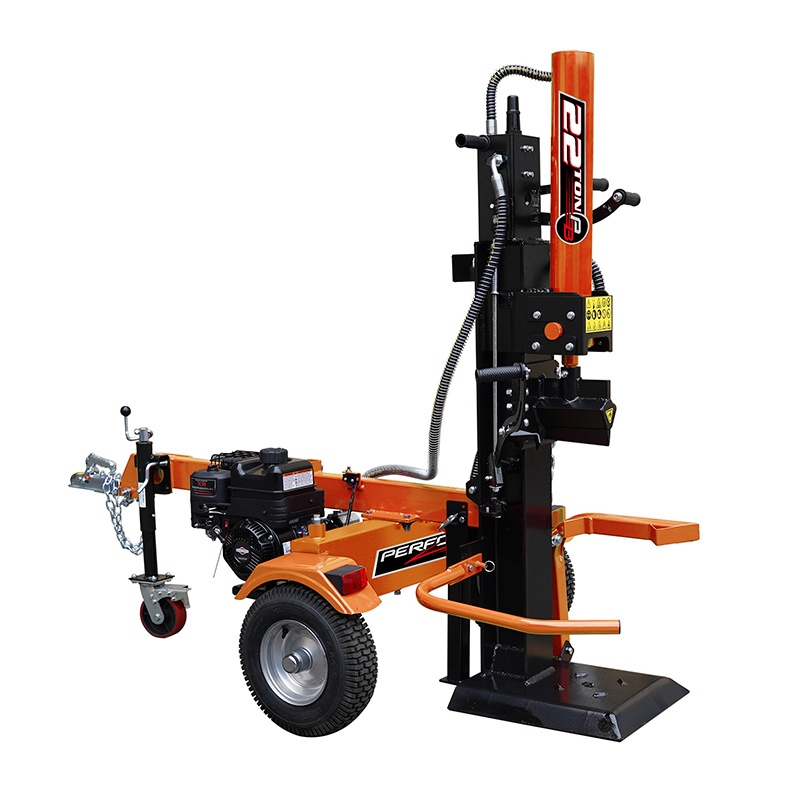
Vertical operation position onlyHardened steel wedge24"/61cm split len...
See Details -
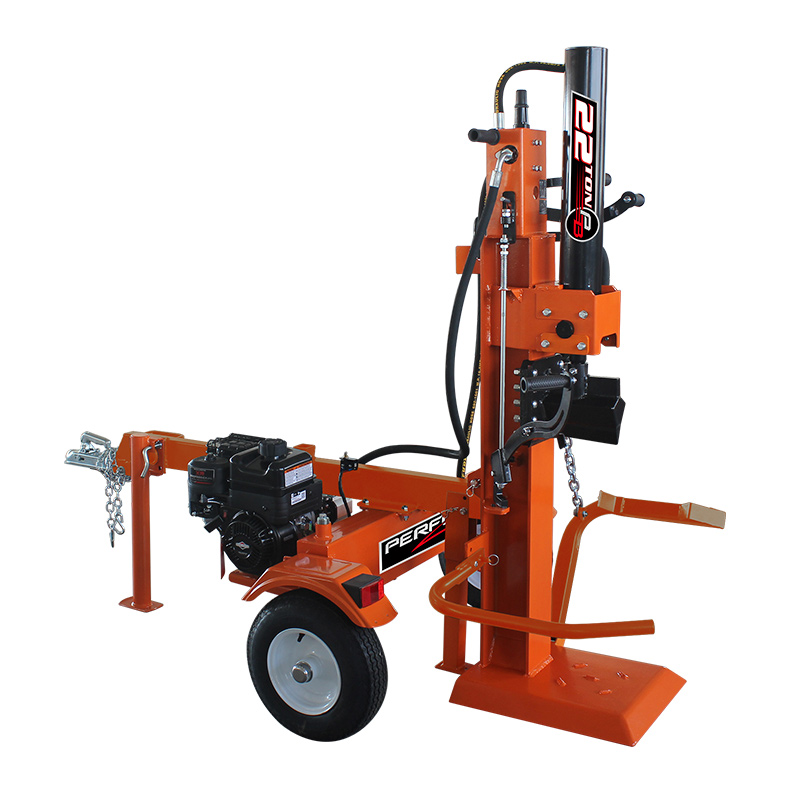
Vertical operation position onlyHardened steel wedge24"/61cm split len...
See Details -
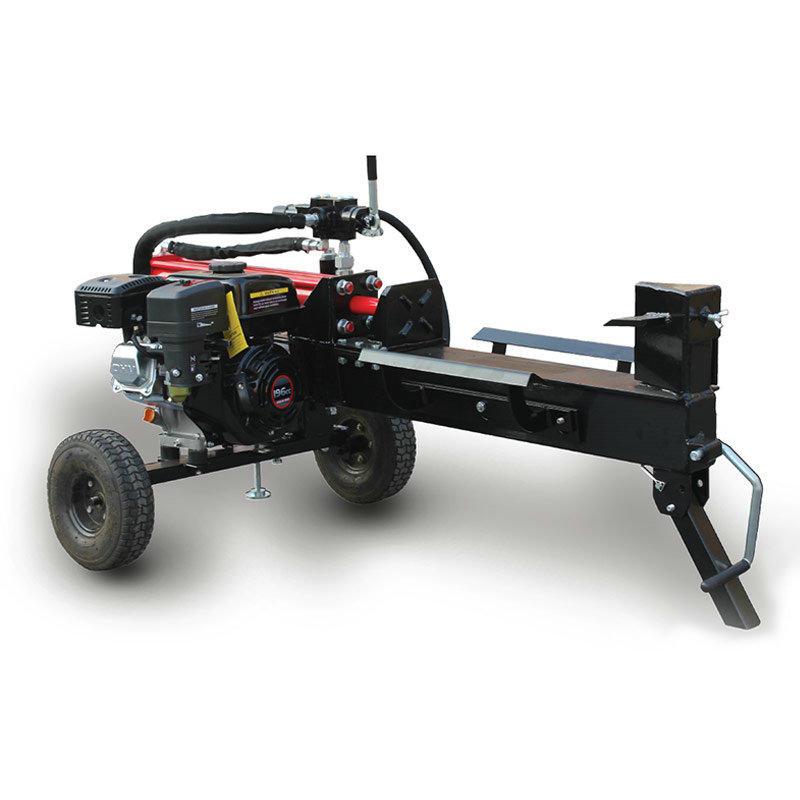
DESCRIPTION Working at horizontal position onlyAuto return hydraulic c...
See Details