 LANGUAGE
 English
 Deutsch
 Español
 Français
 русский









DESCRIPTION Working at horizontal position onlyAuto return hydraulic c...
See Details
Low-Profile 12-Ton Gasoline Log Splitter for Efficient Firewood Processing
Preparing firewood by hand can be physically demanding, slow, and inconsistent, especially when dealing with hardwood rounds, large-diameter logs, or a full winter’s supply. A dependable hydraulic log splitter changes the process by converting engine power into controlled splitting force. The LS12J is designed for users who need practical performance, compact transportation, and straightforward operation in a horizontal working position.
With a rated maximum splitting force of 12 tons, a Loncin 196cc gasoline engine, an 11 GPM two-stage hydraulic pump, and a hardened steel wedge, this low-profile log splitter is suited to residential firewood preparation, small farms, rural properties, landscaping operations, and seasonal outdoor work. Its design concentrates on the features that matter most in everyday use: reliable hydraulic power, an automatic return valve, accessible log loading, manageable dimensions, and towing capability.
The machine is manufactured by Jiashan Superpower Tools Co., Ltd., an established Chinese producer of log splitters and lawn and garden equipment. The company has operated since 1997 and serves customers in North America, Europe, Australia, Asia, and South America. Its ISO 9001:2015-certified quality management system, CE-certified product range, factory experience, and focus on energy-efficient outdoor equipment support the product’s role as a practical solution for international equipment buyers.
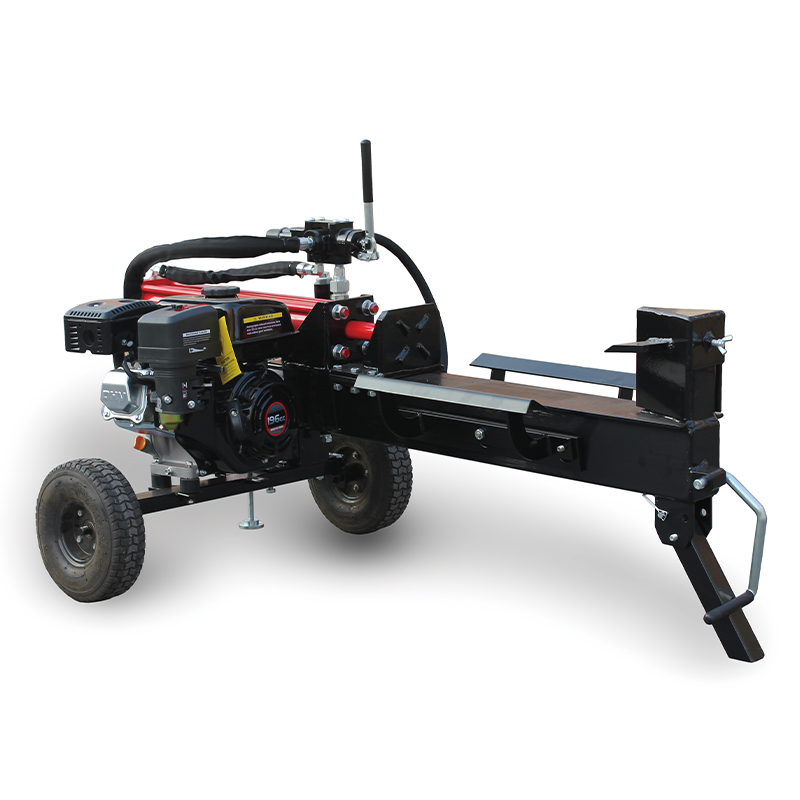
LS12J
Product Overview
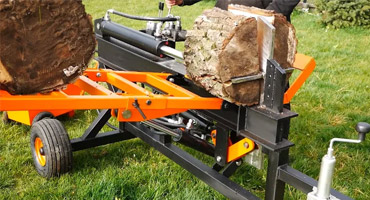
The LS12J belongs to the gasoline low-profile log splitter category. It is intended to work in a horizontal position only, making the operating arrangement simple and consistent. The operator places a log on the working beam, positions it against the splitting wedge, and activates the hydraulic control valve. The ram then advances through the log before returning automatically when the cycle is complete.
This horizontal-only configuration can be an advantage for users who prefer a lower loading height. Logs do not need to be lifted to a tall vertical operating position, and the machine’s low-profile frame makes the work area easier to approach. For many residential applications, the horizontal layout also simplifies positioning near a woodpile, trailer, shed, or processing station.
The LS12J is specified with a maximum log length of 20 inches, or 508 millimeters. This capacity covers a common firewood size and allows users to process logs into manageable pieces for stoves, fireplaces, boilers, and outdoor heating systems. The product’s 12-ton maximum splitting force gives it a useful balance between power and portability. It is stronger than light-duty manual or electric models while remaining more compact than many high-capacity commercial splitters.
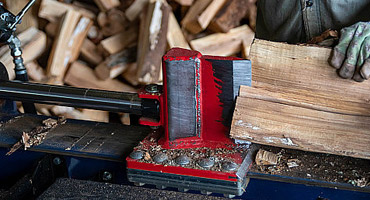
Its main operating features include an auto-return hydraulic control valve and a heavy-duty splitting wedge measuring approximately 6.3 inches in height. The wedge is made from hardened steel, a material selected for its ability to withstand repeated contact with wood fibers and knotty sections. Together, the wedge profile, hydraulic cylinder, and two-stage pump provide a functional system for regular firewood production.
Key Technical Specifications
The following table summarizes the available specifications for the LS12J. Buyers should confirm final production details, packaging information, and applicable regional requirements with the supplier before placing an order.
| Specification | Details |
|---|---|
| Model | LS12J |
| Product category | Gasoline log splitter, low profile |
| Working position | Horizontal only |
| Maximum splitting force | 12 tons |
| Cycle time | 26 seconds |
| Engine | Loncin, 196cc gasoline engine |
| Maximum log length | 20 inches / 508 millimeters |
| Cylinder | 3-inch bore by 18-3/4-inch specification |
| Pump | 11 GPM, two-stage hydraulic pump |
| Hydraulic capacity | 2.1 gallons / 8 liters |
| Wedge | 6.3-inch hardened steel wedge |
| Valve | Automatic return |
| Wheel size | 10 inches |
| Maximum towing speed | 10 miles per hour |
| Listed net/gross weight | 242/178 pounds, or 110/80.9 kilograms, as provided |
| Package dimensions | 62.2 × 25.6 × 17.32 inches / 158 × 65 × 44 centimeters |
| Container quantity | 125 pieces per 40-foot general-purpose container |
Hydraulic Performance and Splitting Capability
The hydraulic system is the central working system of the LS12J. Rather than relying on manual impact or a purely mechanical drive, the machine uses pressurized hydraulic fluid to extend a cylinder and push a log against the wedge. This arrangement provides steady force throughout the splitting stroke and helps the operator work through wood that would be difficult to divide with an axe or maul.
The specified 12-ton maximum splitting force positions the LS12J in a practical middle range. It is appropriate for many household and small-property firewood tasks, including processing typical hardwood and softwood rounds within the stated log-length limit. Actual results will vary according to wood species, moisture content, diameter, grain direction, knots, temperature, wedge condition, and proper engine and hydraulic maintenance.
A two-stage pump is particularly useful in a log splitter because the machine does not need maximum pressure during every part of the cycle. During the initial movement, the pump can provide faster flow for quicker ram travel. When the wedge meets greater resistance, the system can transition toward higher pressure and increased force. This design helps combine useful cycle speed with the ability to handle tougher sections of wood.
The 11 GPM pump specification indicates a substantial hydraulic flow rate for a compact gasoline-powered splitter. Flow rate influences how quickly hydraulic fluid can move through the system, while pressure determines the force available at the cylinder. The two-stage arrangement is therefore not simply a power feature; it is also a way to make the machine more efficient during repeated cycles.
The listed cycle time is 26 seconds. Cycle time should be understood as a guide rather than a universal production guarantee. It can be influenced by log size, ambient temperature, hydraulic fluid condition, engine speed, operator loading time, and whether the full cylinder stroke is used. Even so, a defined cycle specification helps buyers compare equipment and estimate the time required to process a batch of firewood.
Advantages of the Low-Profile Horizontal Design
The low-profile frame gives the LS12J a distinct position among competing splitter layouts. Some large machines emphasize vertical operation or offer multiple configurations, but a horizontal-only unit can be easier to understand and use for customers whose work is centered on standard-length firewood.
First, the lower loading height can reduce the need to raise logs onto a tall platform. This is important when processing a large quantity of rounds because repeated lifting is one of the most tiring parts of firewood preparation. Users can roll or carry logs onto the beam, place them in line with the wedge, and operate the control valve from a consistent position.
Second, the horizontal arrangement offers a predictable work sequence. The operator does not need to change the frame between vertical and horizontal modes. Fewer mode changes can mean less setup time, fewer moving components to adjust, and a simpler operating routine for seasonal users.
Third, the low-profile format can support easier storage. With package dimensions of approximately 62.2 by 25.6 by 17.32 inches, the product is designed for relatively compact shipment and storage compared with larger commercial machines. Buyers should still allow sufficient space for safe operation, ventilation, maintenance access, and the storage of fuel and hydraulic supplies.
The horizontal-only design does have a clear operating boundary: logs must be loaded onto the beam rather than split upright on the ground. For this reason, the LS12J is most suitable for users who regularly handle logs that can be safely lifted or rolled into the working position and who value a simple, dedicated configuration.
Engine and Power System
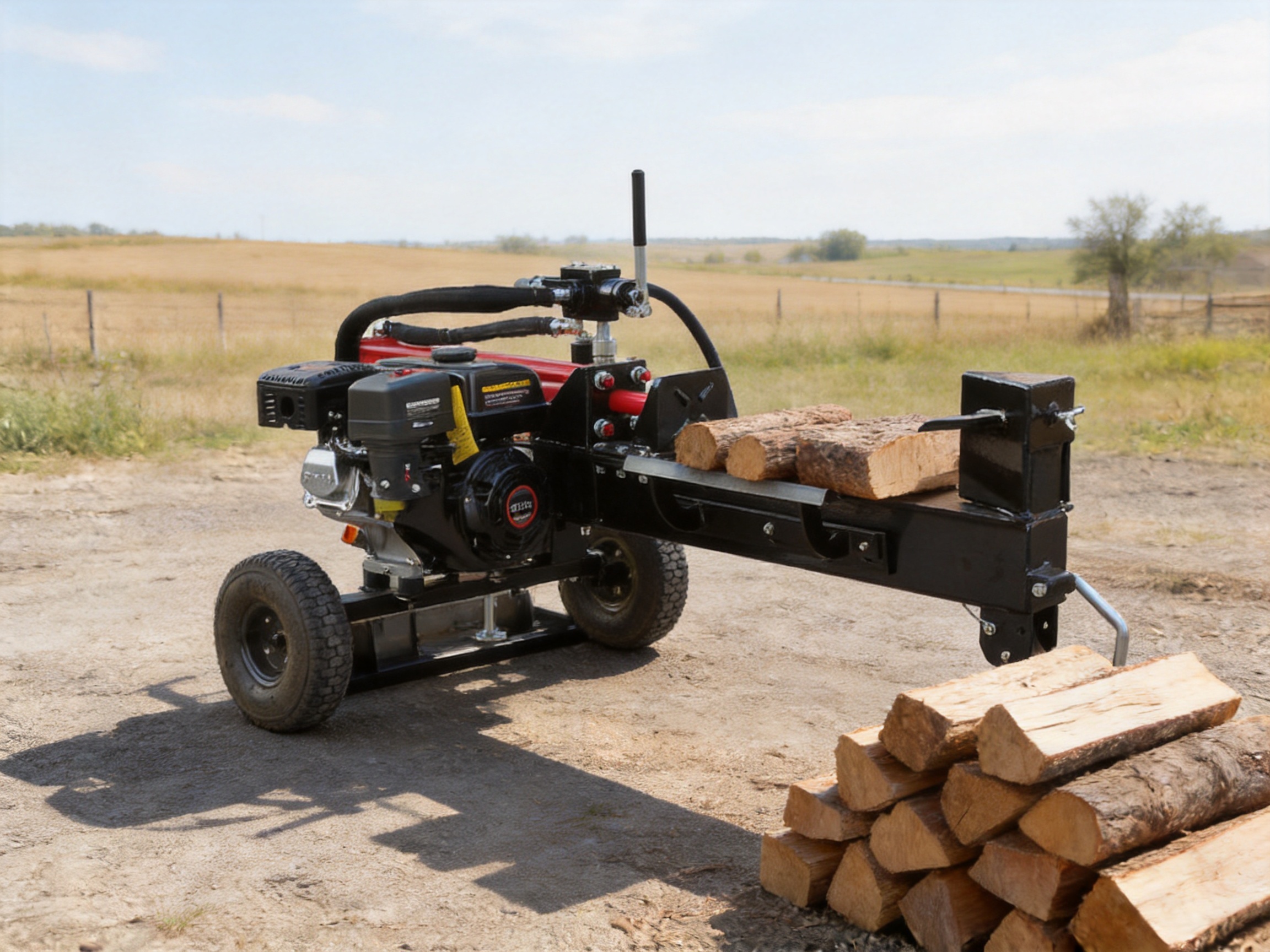
The LS12J uses a 196cc Loncin gasoline engine. A gasoline power unit allows the splitter to operate away from fixed electrical outlets, which is valuable for rural properties, woodlots, farms, campsites, and job locations where grid power is unavailable or inconvenient. The engine-driven format also avoids the need to position a long electrical cable near wet ground, rough terrain, or a large outdoor woodpile.
Gasoline power provides operational flexibility, but it also creates responsibilities. Operators should use clean fuel of the correct specification, inspect the fuel system regularly, keep the air filter clean, and follow the engine manufacturer’s maintenance schedule. The engine should be operated outdoors or in a properly ventilated area because gasoline engines produce exhaust gases that can be dangerous in enclosed spaces.
The relationship between the engine, pump, hydraulic reservoir, and cylinder is important to overall performance. The engine supplies mechanical power to the pump. The pump circulates hydraulic fluid through the control valve and cylinder. The cylinder converts fluid pressure into linear movement, and the wedge transfers that movement into splitting action. Maintaining each part of this chain is essential for consistent operation.
Compared with smaller electric splitters, the gasoline configuration can offer greater placement freedom and a stronger impression of jobsite independence. Compared with larger commercial gasoline models, the 196cc engine and compact format may be more appropriate for homeowners, small contractors, and distributors seeking a manageable product rather than an oversized production machine.
Automatic Return Valve and Operator Efficiency
The automatic return valve is one of the most practical features of the LS12J. After the ram completes its forward movement, the valve allows the cylinder to return without requiring the operator to hold the control continuously through the entire return stroke. This helps establish a repeatable operating rhythm: load the log, activate the control, monitor the split, and prepare for the next cycle.
Automatic return can reduce unnecessary hand movement and make repeated splitting less tiring. It also supports more consistent cycle operation because the ram returns to its starting position in a controlled manner. For a user processing a cord or several loads of firewood, small reductions in repetitive effort can make a meaningful difference over the course of a day.
The valve should always be used according to the operating instructions supplied with the final machine. Operators should keep hands, clothing, tools, and body parts away from the wedge, ram, log supports, and other pinch points. An automatic function improves convenience, but it does not replace careful supervision.
Hardened Steel Wedge Construction
The wedge is the component that directly enters the log, so its material and geometry have a major influence on performance. The LS12J uses a 6.3-inch hardened steel wedge. Hardened steel is selected to improve resistance to wear and deformation during repeated contact with wood, particularly when the material contains knots, dense grain, or irregular surfaces.
A durable wedge can help preserve the machine’s working profile over time. However, no wedge should be treated as indestructible. Rocks, metal fragments, embedded debris, and improper loading can damage the edge or create unsafe conditions. Logs should be inspected before splitting, and damaged equipment should be removed from service until it has been assessed and repaired.
The wedge height is suitable for the machine’s stated application and contributes to controlled separation of the log. In practice, performance depends on more than wedge dimensions. Correct log placement, sharpness and condition, hydraulic pressure, engine speed, and the grain structure of the wood all affect the result.
Compared with basic manual splitting tools, a fixed hardened wedge driven by hydraulic force offers greater consistency and reduces dependence on the operator’s striking technique. Compared with some low-cost light-duty splitters, a purpose-built hardened wedge may provide a more durable working interface for repeated seasonal use.
Mobility, Towing, and Placement
The LS12J is equipped with 10-inch wheels and has a specified maximum towing speed of 10 miles per hour. These features support movement around a property and transportation over suitable private paths or controlled work areas. The wheels make it easier to reposition the unit near a woodpile, storage building, or processing station without manually carrying the machine.
Towing speed should always be interpreted together with local regulations, the towing vehicle, hitch arrangement, road conditions, and the manufacturer’s operating instructions. The stated maximum does not automatically mean that the machine is approved for public-road towing in every market. Buyers should verify legal requirements, lighting requirements, safety chains, hitch compatibility, and registration rules where applicable.
For best stability, the splitter should be positioned on firm, level ground before use. Soft soil, steep slopes, loose gravel, ice, and wet surfaces can affect stability and operator control. The unit should not be operated in a location where the wheels can roll unexpectedly or where nearby structures create a risk of contact with the moving beam or logs.
Portability is one area in which the LS12J can compete effectively with larger machines. Its compact package dimensions and wheel-equipped frame may reduce storage and handling demands for distributors and end users. At the same time, users should remember that a compact splitter still contains heavy steel parts, hydraulic components, fuel, and a powered engine. Appropriate lifting equipment and safe handling procedures are required during unloading and assembly.
Applications for Homeowners and Small Businesses
The LS12J is well suited to homeowners who heat with wood or maintain a regular supply of firewood for seasonal use. It can also serve rural property owners, small farms, landscaping businesses, garden centers, rental fleets, and outdoor power equipment dealers.
For household use, the machine can reduce the labor required to convert delivered rounds into stove-length pieces. Users can organize a workflow in which unprocessed logs are staged on one side, the splitter is positioned in a safe central location, and finished pieces are stacked or loaded on the other side. This arrangement helps minimize unnecessary carrying and keeps the work area orderly.
Small landscaping and property-maintenance businesses may use the splitter when clearing fallen trees or processing wood generated during seasonal work. The gasoline engine allows operation at locations where electric power is not readily available. However, commercial users should evaluate expected daily volume, log diameter, staffing, transport requirements, and service support before selecting a machine.
Rental companies can also consider the product if they need a straightforward unit that customers can understand quickly. Horizontal-only operation, automatic return, and a defined maximum log length can make rental instructions easier to communicate. Rental operators should establish inspection procedures for hydraulic leaks, wedge condition, wheel security, engine oil, fuel systems, and safety labels before each rental.
Comparison with Common Competing Configurations
The LS12J should be evaluated against comparable products based on application rather than headline tonnage alone. A machine with a higher advertised force may be larger, heavier, more expensive, and less convenient to store. Conversely, a very small electric splitter may be easy to store but unsuitable for remote locations or demanding wood types.
Against manual axes and mauls, the LS12J offers hydraulic assistance, a repeatable working motion, and reduced dependence on impact strength. Manual tools remain inexpensive and highly portable, but they require more physical exertion and may be less productive for large batches of firewood.
Against small electric splitters, the LS12J provides gasoline-powered mobility and avoids dependence on an electrical outlet. Electric models may be quieter and simpler for use close to a house, but they can be limited by cord length, outlet access, and electrical conditions. The best choice depends on the user’s location and operating priorities.
Against larger vertical or dual-position splitters, the LS12J offers a focused horizontal format and potentially easier storage. Larger multi-position machines may handle heavier or wider rounds, but they often involve additional weight, greater storage space, and more complex transport requirements. The LS12J is aimed at customers who want a compact dedicated configuration for logs within its stated capacity.
Against other compact gasoline splitters, the product’s combination of a 12-ton rating, 196cc engine, two-stage 11 GPM pump, automatic return valve, hardened wedge, and 20-inch log-length capacity creates a balanced specification. Buyers should compare actual hydraulic design, cycle time, serviceability, safety equipment, warranty terms, and supplier support rather than relying on force ratings alone.
Manufacturing Strengths and Quality Management
Jiashan Superpower Tools Co., Ltd. has specialized in log splitters and lawn and garden equipment since 1997. More than two decades of industry experience provide an important foundation for product development, sourcing, assembly, inspection, packaging, and export coordination.
The company operates under an ISO 9001:2015-certified quality management system. ISO 9001 is associated with structured quality processes, documented procedures, customer-focused management, corrective action, and continual improvement. Certification does not mean that every product is maintenance-free or that operating conditions cannot affect performance. It does, however, indicate that the manufacturer has established a formal framework for managing product and process quality.
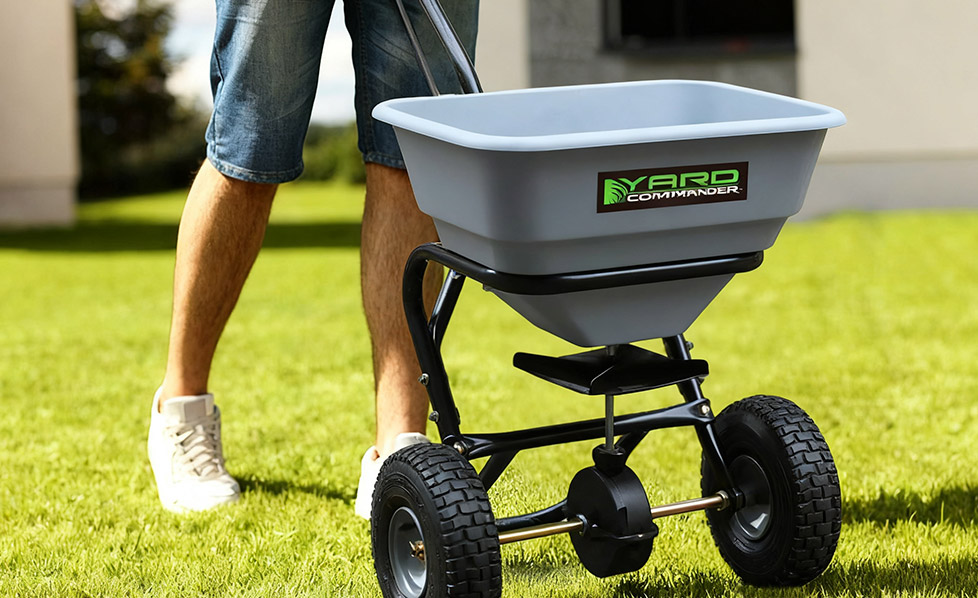
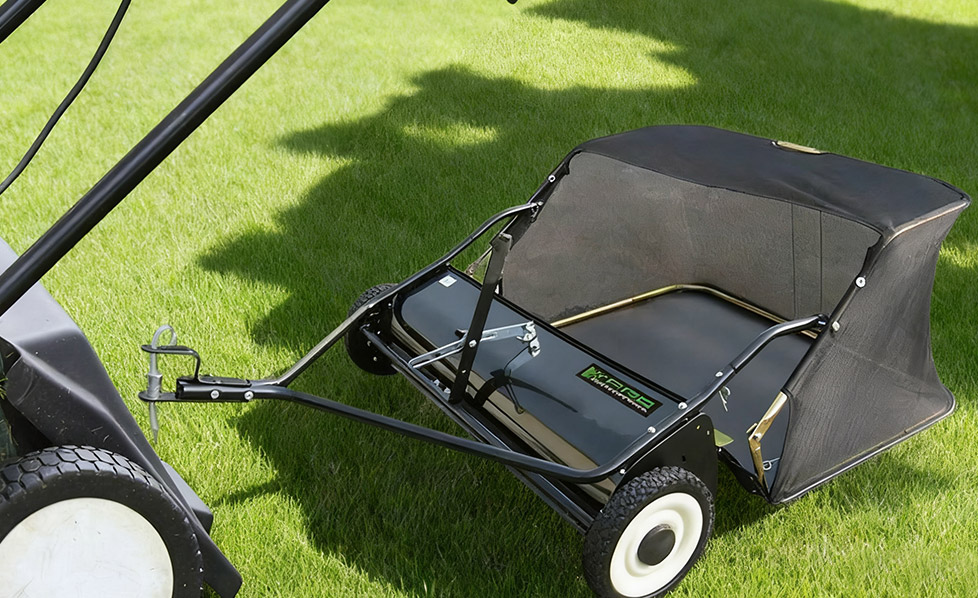
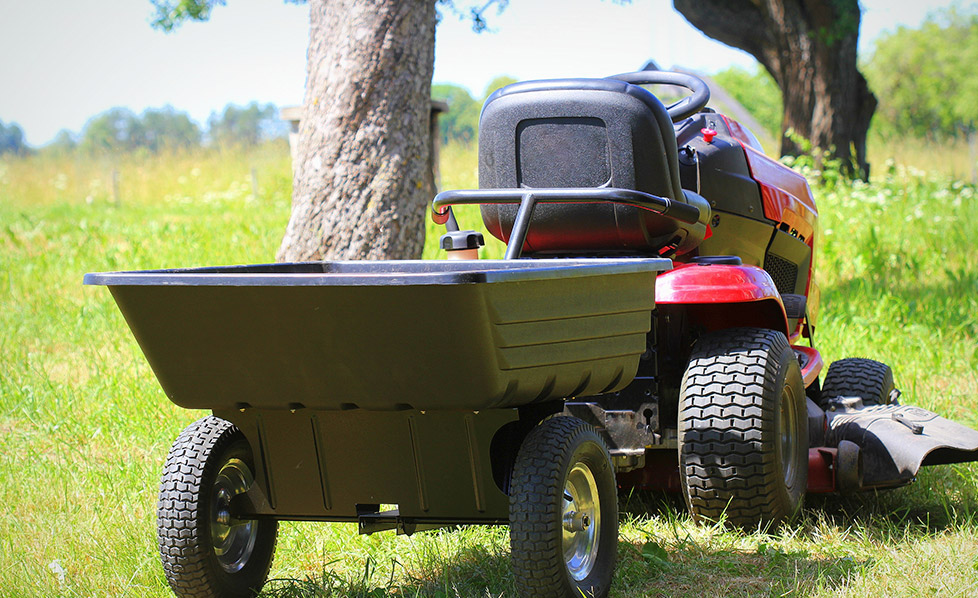
The company’s wider product range includes dump carts, spreaders, lawn sweepers, lawn aerators, and other outdoor power equipment. This product breadth can support shared knowledge in frame fabrication, wheel systems, mechanical assemblies, power equipment integration, packaging, and international product requirements.
Many products from the company carry CE certification. For buyers serving European markets, CE-related documentation and conformity requirements should be confirmed for the specific model and production configuration. Certification status can depend on the exact product, market, and applicable directives or standards, so importers should request current technical documents before advertising or distributing the equipment.
The company’s stated focus on innovative, energy-efficient, environmentally friendly, and cost-effective products aligns with the needs of the modern outdoor equipment market. For a gasoline log splitter, energy efficiency may include suitable engine sizing, efficient hydraulic flow management, reduced unnecessary operating time, durable components, and product longevity. Environmental responsibility also includes proper fuel handling, hydraulic fluid disposal, packaging management, and repair rather than premature replacement.
Factory-to-Market Product Development
A reliable log splitter is the result of coordination among several manufacturing stages. Product development begins with defining the intended application, including log length, splitting force, working position, engine output, transport expectations, and target markets. These requirements guide the selection of the frame, hydraulic cylinder, pump, valve, wedge, wheels, and engine.
After design requirements are established, component compatibility becomes essential. The engine must provide suitable power for the pump. The pump must work with the hydraulic reservoir, control valve, hoses, fittings, and cylinder. The frame must support the working loads generated during splitting. The wedge and beam must maintain alignment so that hydraulic force is directed into the log rather than causing unnecessary stress on the structure.
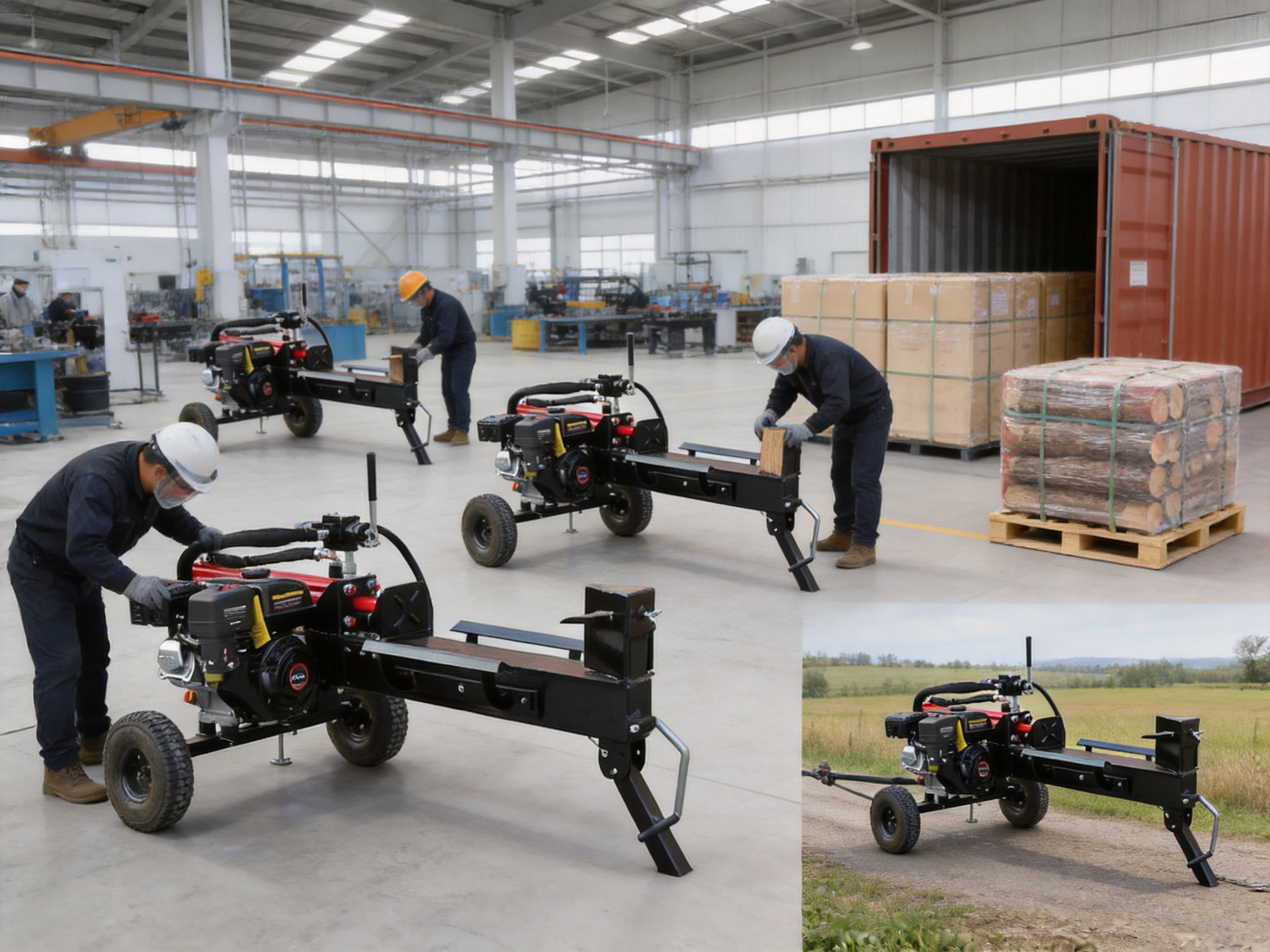
Manufacturing quality depends on consistent fabrication and assembly. Steel frame parts must be formed and joined accurately. Hydraulic connections must be fitted correctly and inspected for leakage. Moving parts require suitable alignment and secure fastening. Wheels and towing-related components need appropriate attachment and stability checks. Surface finishing and protective coatings can help improve resistance to ordinary outdoor exposure when properly applied and maintained.
Inspection is especially important for a product that combines fuel, high-force hydraulics, moving steel components, and towing mobility. A structured inspection process can include checks of welds, fasteners, hydraulic lines, valve operation, engine installation, wheel security, product labels, packaging protection, and documentation. Buyers seeking private-label or wholesale orders should discuss inspection records, sampling plans, spare-parts availability, and shipment procedures with the supplier.
Export manufacturing also requires careful packaging. The LS12J has listed package dimensions of 62.2 by 25.6 by 17.32 inches, making container planning an important part of distribution. The stated container quantity is 125 pieces per 40-foot general-purpose container. Actual loading results may depend on packaging revisions, pallet arrangements, protective materials, and shipping regulations, so final logistics should be confirmed against approved packing specifications.
Maintenance Considerations
Routine maintenance is central to safe and productive operation. Before each use, the operator should inspect the machine for loose hardware, damaged guards or labels, hydraulic leaks, cracked hoses, unusual wear, wheel problems, and debris around the working area. The wedge and beam should be checked for damage, while the engine should be inspected according to its operating manual.
Hydraulic fluid should be maintained at the correct level and replaced or filtered according to the manufacturer’s service recommendations. Contaminated or insufficient hydraulic fluid can reduce performance and increase wear in the pump, valve, and cylinder. Any leak should be addressed promptly because hydraulic fluid under pressure can penetrate skin and create a serious injury hazard.
The engine requires regular attention to oil level, air filtration, spark plug condition, fuel quality, and cooling airflow. Fuel should be stored safely and handled away from ignition sources. At the end of a seasonal operating period, the owner should follow the engine manufacturer’s instructions for fuel storage and protection against deterioration.
Bolts, wheel hardware, hitch components, and structural connections should be checked periodically. Vibration during transport and operation can loosen fasteners over time. The machine should be cleaned after use, especially if exposed to mud, moisture, sap, or wood debris. Cleaning makes it easier to identify leaks and damage during the next inspection.
Maintenance intervals can differ according to climate, operating hours, wood type, storage conditions, and duty cycle. The final user manual supplied with the machine should take priority over general guidance. Commercial operators and rental fleets may benefit from a written inspection log that records operating hours, service work, defects, and replacement parts.
Safe Operating Practices
Operators should read the complete product and engine instructions before starting the machine. Only trained adults should operate the splitter. Children, bystanders, and untrained persons should remain outside the work area, and the operator should maintain clear visibility of the wedge, log, ram, and surrounding ground.
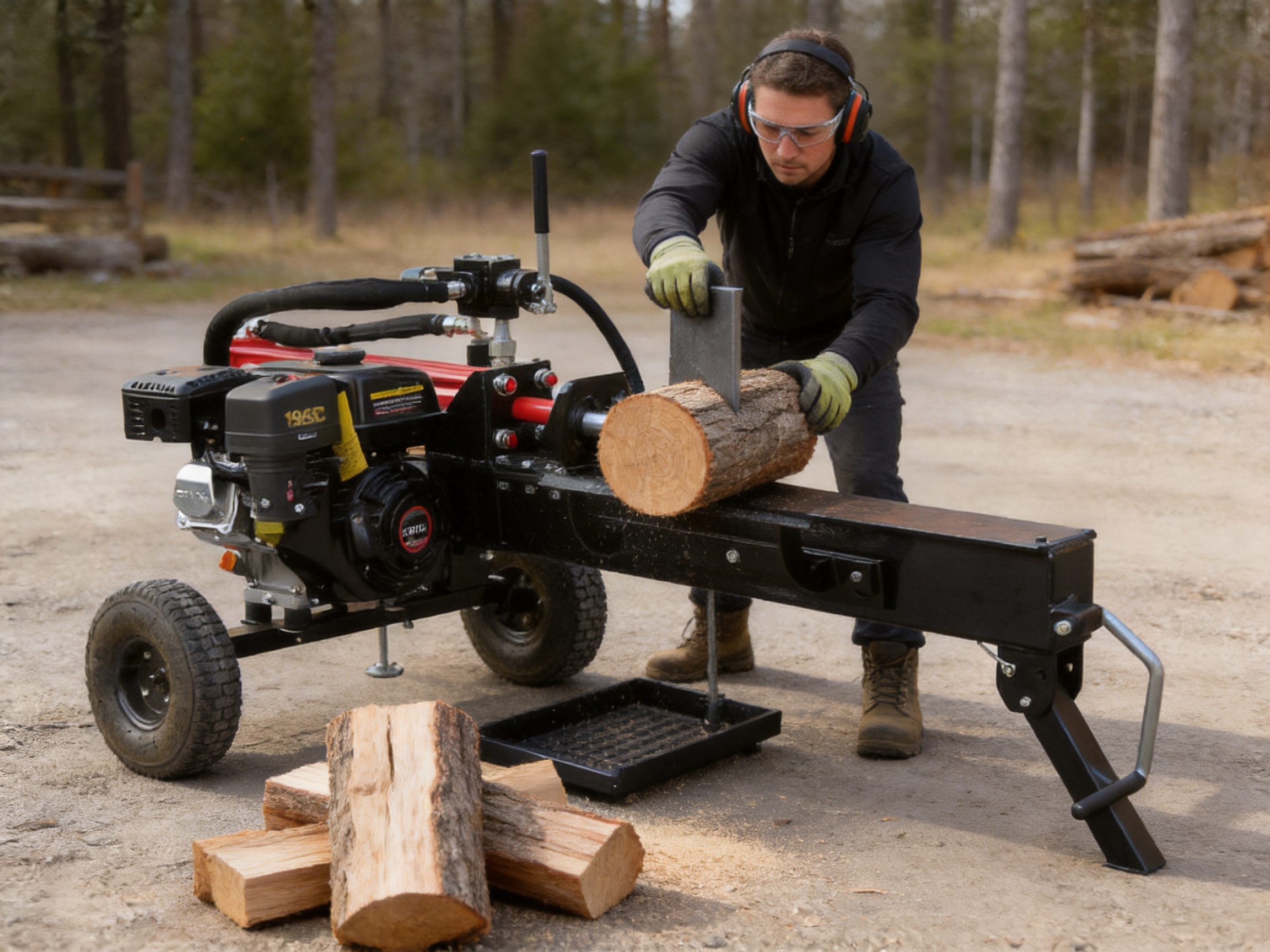
Suitable protective equipment may include safety glasses or a face shield, hearing protection, work gloves appropriate for handling logs, sturdy footwear, and close-fitting work clothing. Loose clothing, jewelry, and untied hair should be kept away from moving components. Gloves should provide handling protection without reducing the operator’s ability to control the machine safely.
The log should be placed securely and centered in accordance with the machine’s instructions. Crooked, unstable, or partially supported logs can move unexpectedly during splitting. Operators should never attempt to hold a log in place with their hands while activating the hydraulic control. If a log becomes stuck, the engine should be stopped and the hydraulic pressure relieved according to the manual before any attempt is made to correct the condition.
The machine should be used only within its stated capacity. The maximum log length is 20 inches, and the product is designed for horizontal operation. Exceeding the recommended dimensions, modifying the wedge, bypassing safety features, or using unauthorized attachments can create mechanical and personal hazards.
Because the product uses gasoline, it should be refueled only when the engine is stopped and cool. Fuel should not be spilled onto hot surfaces. The splitter should be operated outdoors in a well-ventilated area, away from buildings, sparks, open flames, and combustible materials. Hydraulic oil, engine oil, and fuel should be disposed of in accordance with local environmental regulations.
Purchasing and Distribution Considerations
For individual buyers, the most important questions concern application fit. The customer should determine the typical log length and diameter, wood species, expected seasonal volume, storage location, transport route, power availability, and service capability. A 12-ton horizontal gasoline splitter can be an excellent fit for many household and small-property users, but it is not a substitute for a larger commercial processor when the workload exceeds its design scope.
For wholesalers and distributors, product consistency, documentation, packaging, spare parts, warranty administration, and communication are equally important. The supplier can provide information about model configuration, container planning, product labeling, manuals, replacement hydraulic components, engine support, and regional compliance documentation.
The LS12J has a stated container quantity of 125 pieces in a 40-foot general-purpose container. This information may help importers estimate purchasing volume and freight utilization. Nevertheless, buyers should confirm whether the quantity applies to a particular packaging configuration and whether accessories, pallets, or revised cartons change the final loading plan.
Private-label customers should also clarify branding requirements, color options, decals, manuals, carton artwork, minimum order quantities, sample approval procedures, and inspection standards. A long-term equipment program benefits from clear technical documentation and an agreed process for handling changes to engines, pumps, valves, fasteners, packaging, or safety labels.
Why the LS12J Is a Practical Competitive Choice
The LS12J’s principal advantage is balance. It is not presented as an oversized industrial machine, nor is it limited to light manual assistance. Its design combines a 12-ton splitting force with a 196cc gasoline engine, an 11 GPM two-stage pump, a 26-second stated cycle time, and a maximum log length of 20 inches.
The low-profile horizontal format supports accessible loading and a consistent work routine. The automatic return valve reduces repetitive control effort. The hardened steel wedge is suited to repeated contact with firewood. Ten-inch wheels and a 10-mile-per-hour maximum towing specification support movement around appropriate private areas. Compact package dimensions can simplify storage and container shipping.
These features allow the machine to compete on usability as well as power. A product that is easy to position, understand, maintain, and store may deliver more practical value than a machine with a higher theoretical rating but greater complexity or operating cost. The right comparison is therefore based on total ownership value, including purchase price, fuel use, maintenance, transport, service, productivity, and expected life.
Manufacturing experience further strengthens the proposition. The supplier’s long-term specialization in log splitters and outdoor power equipment, ISO 9001:2015-certified quality system, international market experience, and broader product portfolio provide a foundation for stable production and export cooperation.
Frequently Asked Questions
What type of machine is the LS12J?
The LS12J is a low-profile gasoline log splitter designed for horizontal operation only. It uses hydraulic power to push logs against a hardened steel wedge.
How much splitting force does it provide?
The stated maximum splitting force is 12 tons. Actual splitting performance depends on log species, diameter, moisture, knots, grain direction, temperature, hydraulic condition, and correct operation.
What is the maximum log length?
The maximum stated log length is 20 inches, equivalent to 508 millimeters. Users should remain within the manufacturer’s specified dimensions and should confirm any additional diameter or wood-type recommendations in the operating manual.
Is the splitter suitable for remote locations?
Yes. Its 196cc gasoline engine allows operation without a fixed electrical outlet. It must still be operated outdoors or in a properly ventilated area, and fuel must be stored and handled safely.
What does the two-stage pump do?
A two-stage hydraulic pump is designed to provide faster flow during lower-resistance movement and higher pressure when the wedge encounters greater resistance. This can help balance cycle speed and splitting force.
How fast is the operating cycle?
The listed cycle time is 26 seconds. The actual time can vary according to engine speed, hydraulic fluid temperature, log size, cylinder travel, loading time, and operating conditions.
Does the ram return automatically?
Yes. The LS12J is equipped with an auto-return hydraulic control valve. The operator must still supervise every cycle and keep clear of the moving ram, wedge, log, and pinch points.
Can the machine split logs vertically?
No. The product information specifies horizontal operation only. It should not be modified for vertical use unless an authorized manufacturer-approved configuration is provided.
What kind of wedge does it use?
The machine uses a 6.3-inch hardened steel wedge. The wedge should be inspected regularly and protected from rocks, metal, and other embedded debris that could cause damage.
Can it be towed on public roads?
The stated maximum towing speed is 10 miles per hour. Public-road use depends on local laws, equipment approval, lighting, registration, hitch requirements, and other regulations. Buyers must verify those requirements in their region.
Who may find this model most suitable?
It is suited to homeowners, rural property owners, small farms, landscaping businesses, rental fleets, and outdoor power equipment distributors that need a compact gasoline-powered splitter for logs up to the stated length.
What should importers confirm before ordering?
Importers should confirm the final engine and hydraulic configuration, packaging dimensions, container loading quantity, certification documents, manuals, spare parts, warranty terms, inspection procedures, labeling, and any private-label requirements.
Where is the product manufactured?
The LS12J is manufactured by Jiashan Superpower Tools Co., Ltd., located in Zhejiang Province, China. The company specializes in log splitters and lawn and garden equipment and has operated since 1997.
Conclusion
The LS12J is a focused solution for users who want hydraulic log-splitting capability without the size and complexity of a larger commercial machine. Its 12-ton force rating, Loncin 196cc gasoline engine, two-stage 11 GPM pump, automatic return valve, hardened steel wedge, 20-inch log-length capacity, and low-profile horizontal design create a practical package for seasonal and regular firewood preparation.
Its advantages over common alternatives are found in the combination of mobility, independent gasoline power, accessible loading, repeatable hydraulic operation, and compact storage. The product is best suited to work within its stated limits, on stable ground, with proper maintenance and careful attention to fuel, hydraulic, towing, and operator safety.
For wholesale and international buyers, the manufacturer adds value through long-term industry experience, an ISO 9001:2015-certified quality management system, CE-related product experience, international distribution capability, and a broader outdoor equipment portfolio. These strengths can support both individual product purchases and ongoing business cooperation.
When selected for the right workload and maintained correctly, the LS12J can help turn demanding firewood preparation into a more organized, efficient, and manageable outdoor task.
References
1. Product specification sheet for the LS12J gasoline low-profile log splitter, including hydraulic, engine, dimensional, and packaging data.
2. Manufacturer-provided company information concerning product categories, manufacturing history, quality management, certifications, and international markets.
3. ISO 9001:2015 quality management system principles and guidance for process control, customer focus, and continual improvement.
4. General hydraulic equipment maintenance and safety practices for cylinders, pumps, valves, hoses, and pressurized fluid systems.
5. General gasoline engine operating and maintenance guidance for outdoor power equipment.
6. General workplace safety principles for log handling, hydraulic machinery, powered equipment, towing, fuel storage, and personal protective equipment.
Product: LS12J
PREV:CHIPPER SHREDDER CP6600: A Practical 196CC Solution for Efficient Yard Waste Processing
NEXT:No next article
NEXT:No next article
Interested in cooperation or have questions?
Related products
-
-
Vertical operation position onlyHardened steel wedge24"/61cm split len...
See Details -
DESCRIPTION Accommodates splitting in horizontal only Half beam design...
See Details -
DESCRIPTION Accommodates splitting in horizontal only Half beam design...
See Details